Strategy
How to play Hearts: passing, shooting the moon and strategy
Hearts takes two minutes to learn and years to master. Here are the rules in brief, then the habits that win: smart passing, safe handling of the Queen of spades, card counting, and knowing when a moon is on.
9 min readUpdated By PlayNest team
Hearts in two minutes
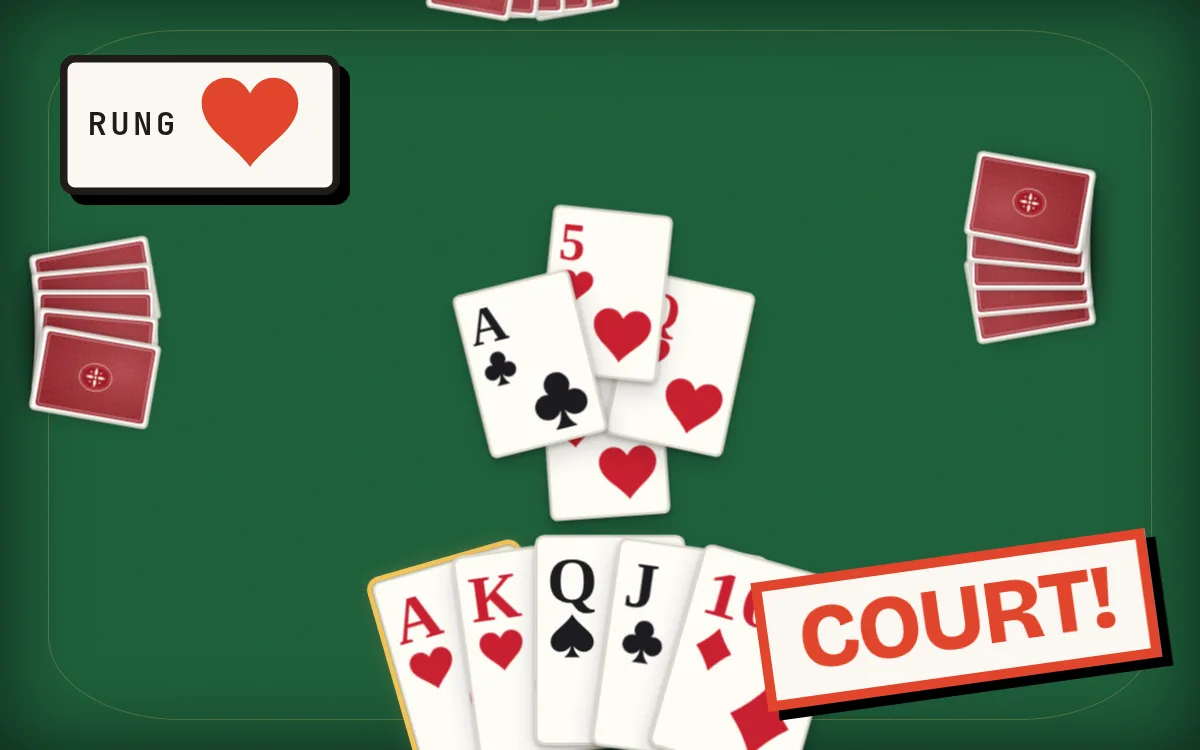
Hearts is a four player trick-taking game in which everyone plays alone and the lowest score wins. Each player gets thirteen cards from a standard deck. Before each hand you pass three cards to another player, then the holder of the 2 of clubs leads it. You must follow the suit that was led if you can, and the highest card of that suit wins the trick. There are no trumps.
Every heart you take costs 1 point and the Queen of spades costs 13 points. When someone reaches the target, usually 100, the player with the lowest total wins. The fastest way to learn is to deal a few hands: you can play Hearts online free against computer players or with friends, and the game highlights the cards you are allowed to play.
- Pass order: left, right, across, then a hold hand with no passing. Then repeat.
- First trick: no hearts and no Queen of spades unless you have nothing else.
- Leading hearts: only after hearts are broken, or if you hold nothing but hearts.
- Shooting the moon: take all 13 hearts and the Queen of spades and the other players are punished instead of you.
Think about the whole hand before you pass
Beginners look at their hand and pass the three highest cards. That is not a terrible habit, but strong players start with a different question: what kind of hand do I want to be playing in ten tricks' time?
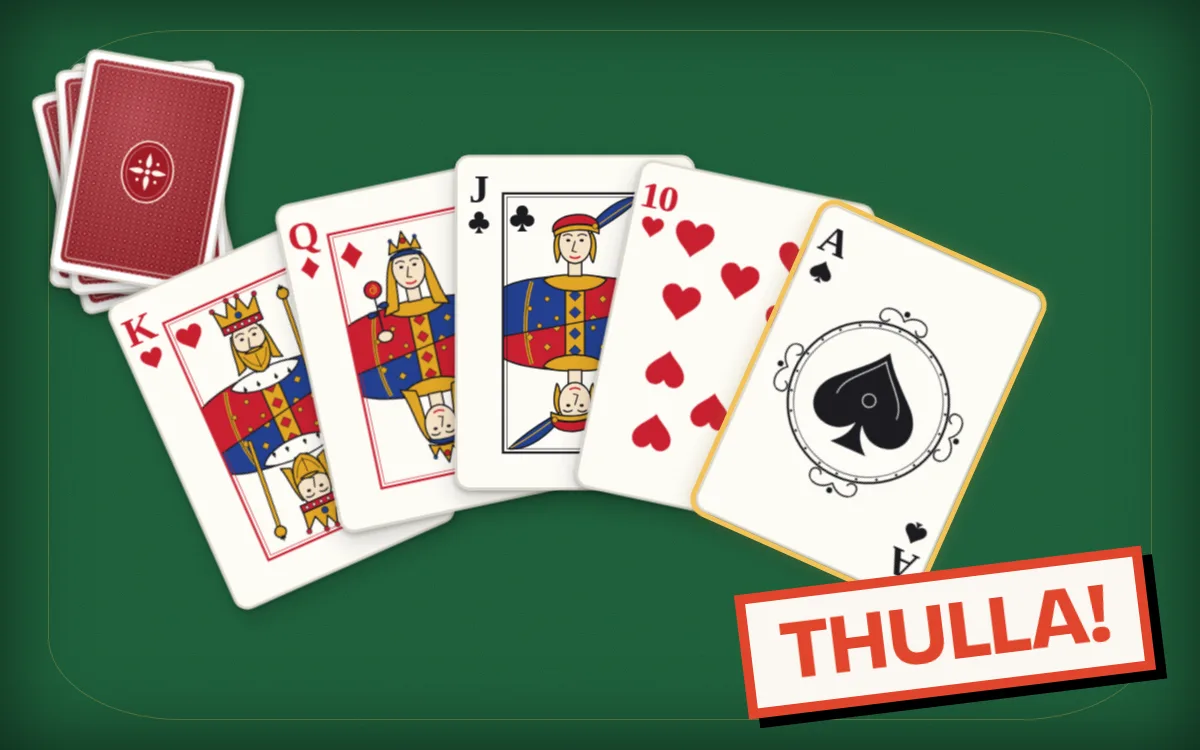
The answer is usually a hand that can escape the lead and can throw away danger. Low cards help you escape: a 2 or 3 lets you duck under almost anything. A void, a suit you hold none of, lets you discard hearts and high cards whenever that suit is led. So the most valuable pass is often one that empties a short suit. If you hold two diamonds, the King and the 6, passing both and one other card gives you a void from the very first diamond lead.
High cards are only dangerous when they are unprotected. An Ace of clubs with five low clubs behind it is fine, because you can choose when to use it. A lonely Ace of hearts is a liability: sooner or later it wins a trick full of hearts.
Tip
Before you confirm the pass, check that you are keeping at least one or two low cards in every suit you still hold.
The Queen of spades: pass her, keep her or flush her out
The Queen of spades is the card that decides most hands, so every pass should start with your spades. The rule of thumb is about length, not about the Queen herself.
- You hold the Queen with four or more other spades: keep her. You can follow spades low several times and wait for a chance to drop her on another player when they lead a suit you are void in.
- You hold the Queen with only one or two other spades: pass her, unless you are passing to a player you want to hurt later. Short spades mean someone can lead spades until she falls out of your hand.
- You hold the Ace or King of spades but not the Queen: pass them if your spades are short. These are the cards that catch her. With long spades you can keep them and play them safely once the Queen is gone.
- You hold no high spades: lead spades early. Every round of spades forces the high cards out, and the player holding the Queen gets nervous.
Remember the pass, it is free information
The three cards you passed are the only cards you know for certain in another player's hand. Use that. If you passed the Queen of spades to the left, you know exactly where she is, and you should avoid giving that player a chance to drop her on you, for example by not winning a spade trick when they are void.
The cards you received tell you something too. A player who passed you three high hearts probably has few hearts left and may be trying to create a void. On the hold hand there is no pass, so everyone plays with what they were dealt and the game is more about counting.
Breaking hearts and leading safely
You may not lead hearts until someone has discarded a heart on an earlier trick, which is called breaking hearts. Until then the leads come from clubs, diamonds and spades, and that early phase is the moment to get rid of dangerous high cards in those suits while everyone is still following.
A safe lead is a low card in a suit where several players still follow. The danger is a lead that lets someone discard: when a player shows out of a suit, they can throw the Queen of spades or a pile of hearts on the trick, and whoever plays highest takes them. Keep track of which suits each player has run out of. It is the single most useful thing to count.
Once hearts are broken, leading a low heart is often a good way to give the lead away. Someone has to win that trick, and it is rarely the player who led the 2.
Shooting the moon: when to try it
Shooting the moon means taking every heart and the Queen of spades in one hand. Instead of scoring 26, the shooter gives 26 points to each opponent, or, under the other common house rule, subtracts 26 from their own score. It is the biggest swing in Hearts, and it fails far more often than it succeeds.
A real moon hand has three things: long, strong hearts (at least the Ace and King, ideally five or more), control of spades (the Ace or King with the Queen, or the Queen herself), and high cards or voids in the other suits so you can win the lead back. If you have two of the three, wait and watch. If an early trick hands you the Queen and nobody else has taken a heart, it may be time to go for it.
The danger is obvious: a failed moon usually leaves you with twenty points or more. Most hands with eight or nine hearts and the Queen are much safer played as a normal hand.
Tip
Decide by the middle of the hand. Once you have taken a few hearts, every trick you give away makes the moon impossible and leaves you with the points.
How to stop someone else shooting the moon
Watch the point cards. If one player has taken the Queen and all the hearts played so far, take a single heart yourself as soon as you can do it cheaply. One point for you is far better than 26 for everyone else.
The best moment is often a heart lead: if you can win it with a middle heart, do it. Another way is to keep a high card in the shooter's long suit so they cannot run it. The Hard computer on PlayNest counts every card and looks ahead before it plays, so a moon attempt is much harder to sneak past it than past a beginner.
The Jack of diamonds variant
In Omnibus Hearts the Jack of diamonds is worth minus 10 to whoever takes it. Our game offers it as an option. It turns diamonds into a suit worth fighting for: the Ace, King and Queen of diamonds become capture cards, and you may try to win a diamond trick late in the hand when the jack is still out. The moon still means all thirteen hearts and the Queen of spades, and the jack's bonus still counts for whoever takes it.
Hearts vs Spades: which should you learn?
Both games use the same table of four players and thirteen tricks, but they ask different things of you. Hearts is every player for themselves, with no trumps and no bidding, and you mostly try to avoid tricks. Spades is a partnership game where spades are always trump and each player bids how many tricks they will win.
If you want something you can teach at the table in two minutes, start with Hearts. If you enjoy planning with a partner and counting tricks, read our guide to Spades rules, bidding and nil. For more ideas for a family card night, see our list of the best free card games to play online with family.
A checklist for every hand
Run through these points and you will already be ahead of most casual players:
- Pass to create a void, and pass high spades if your spades are short.
- Write down, or at least remember, the three cards you passed.
- Get rid of high cards in clubs and diamonds early, while everyone is still following.
- Count the spades until the Queen falls, then relax.
- Notice every time a player shows out of a suit.
- Keep a low card or two in each suit to escape the lead late in the hand.
- If one player is collecting every point card, take one heart to stop the moon.
Practise and play now
Reading about Hearts only gets you so far. Start against the Easy computers to get used to passing and following suit, move to Normal when you are winning, and try Hard when you want an opponent that counts every card. Or open a room and send the link to three friends.
Ready? Play Hearts now: it is free, it runs in your browser, and there is nothing to download.
Questions people ask
- What are the best cards to pass in Hearts?
- Pass cards that create a void in a short suit, and pass the Ace and King of spades if you hold few spades. Pass the Queen of spades when she is not protected by four or more low spades. Keep low cards, they let you escape the lead later.
- Is it better to keep or pass the Queen of spades?
- Keep her when you have four or more other spades, because you can follow low and drop her on someone later. Pass her when your spades are short, since opponents can lead spades until she has to fall.
- When should you try to shoot the moon in Hearts?
- Try it when you hold long, high hearts, control the Queen of spades and can regain the lead in the other suits. Without all three, a failed attempt usually costs you twenty points or more, so most players only go for it with a very strong hand.
- How do you stop someone from shooting the moon?
- Take one heart yourself. As soon as one player looks like collecting every heart and the Queen, win any trick containing a heart, even at the cost of a point or two. That single heart spoils the moon.
- Is Hearts harder than Spades?
- Hearts is easier to learn because there is no bidding and no partner to coordinate with. Both games have real depth: Hearts in passing and counting the danger cards, Spades in bidding accurately and working with your partner.