Blog
Match 3 strategy: special gems, combos and how to clear hard levels
Most people play a match three game by grabbing the nearest three gems. The players who clear hard levels plan two moves ahead, build special gems on purpose and chain them into combos. This guide covers the habits, the shapes and the level types that matter most.
10 min readUpdated By PlayNest team
Why match 3 strategy matters
A match 3 puzzle looks like a game of pure reflexes: swap two gems, pop three, repeat. In a level with a move limit, though, it is closer to a planning puzzle. You have a fixed number of swaps and a goal to hit, so every swap that does only the minimum is a swap you cannot get back.
The difference between a player who is stuck on a level for an hour and one who clears it in a few tries is almost never speed. It is a handful of habits: look at the goal first, search for bigger shapes than three, build special gems on purpose and keep them for the moment they matter. You can practise every idea below in our free Gem Match 3, a swap gems game with 60 levels and no download.
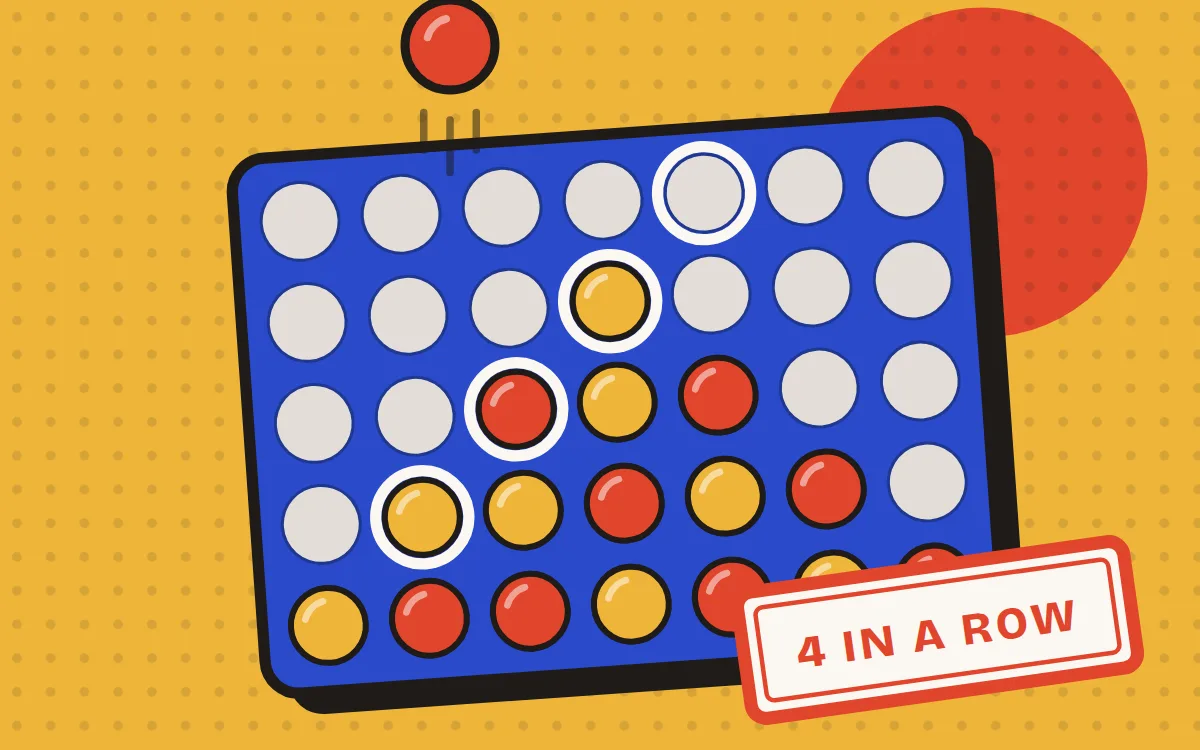
If you like puzzles that reward thinking ahead, the same mindset helps in other games on the site. Our guide to how to win Connect Four is about building two threats at once, which is exactly what a good match 3 setup does too.
The basic rules in one minute
You swap two neighbouring gems, side by side or one above the other. The swap must create a line of three or more of the same colour, horizontally or vertically, or the gems bounce back. In Gem Match 3 a bounced swap costs no move, so you can test ideas freely. Matched gems pop, the gems above fall into the gaps and new ones drop in from the top. If those falling gems make new matches, they pop as well. That chain is called a cascade.
Every level has a goal and a move limit. The goal might be a target score, a number of gems of certain colours, clearing jelly tiles under the board, or bringing cherries down to the bottom row. You win by reaching the goal before the moves run out, and the more moves you have left, the more stars you earn.
How to make special gems
Special gems are the biggest source of power in the game, and they are made by matching more than three. Memorise these shapes, because every other tip in this guide builds on them.
- Match four in a line to make a Line gem. A horizontal four makes a gem that clears its row when used. A vertical four makes a gem that clears its column.
- Match five in a line to make a Colour Burst. Swap it with any gem and it clears every gem of that colour on the board.
- Match an L, T or plus shape to make a Bomb. It blasts a 3 by 3 area around itself.
Tip
Before you make any three-gem match, spend two seconds looking for a four or a five. One extra gem in the line turns a match into a special gem, and a special gem is almost always worth more than the one move it costs you.
Special gem combos: the real power moves
A single special gem is useful. Two together are decisive. When you swap one special gem with another, they combine into a much bigger effect, and setting these up on purpose is how experienced players finish tough levels in a few swaps.
- Line plus Line: a cross that clears a whole row and a whole column at once.
- Bomb plus Line: a wide blast that clears three rows or three columns.
- Bomb plus Bomb: a 5 by 5 explosion, large enough to clear a quarter of the board.
- Colour Burst plus any gem: clears every gem of that gem's colour.
- Colour Burst plus Colour Burst: clears the whole board.
Tip
If you have two special gems on the board and they are not yet next to each other, a good plan is to make your next matches so that they move one toward the other. Saving them for a combo is nearly always better than using each one alone.
Think two moves ahead, not one
The weakest way to play is to scan for the nearest three and take it. A stronger way is to ask what the board will look like after the swap. Gems fall, and where they land decides your next swap.
Here is a simple routine for every turn. First, read the goal. Second, scan the whole board for fours, fives and L or T shapes. Third, if there is none, look for the three-match that leaves a good position, for example one that lines up two gems of the same colour for a special gem next turn. Only then pick a swap.
This takes a few seconds, and the hint button is there if you want a second opinion. The hint appears by itself after about six seconds with no move, but a hint shows you a legal match, not the best one. Use it to unstick yourself, not to replace thinking.
Work from the bottom or the top?
Because gems fall, matches low on the board shake up every column above them. That makes cascades more likely but also less predictable. Matches near the top disturb little, so they are easier to control.
A good rule is this. When you need luck, for example to boost a score or when you have moves to spare, make matches low on the board and let the cascades run. When you need precision, such as clearing a particular jelly tile or dropping a cherry with a few moves left, work from the top and keep the bottom steady until you need it.
Tip
A cascade multiplies your score. In Gem Match 3 each chain step raises the multiplier (x1, x1.5, x2 and so on), and each gem is worth 10 points times that multiplier. One long chain beats several separate matches.
How to beat score levels
Score levels are the simplest, so they are where good habits pay off fastest. The two things that raise your score are special gems, which give bonus points and clear many gems at once, and cascades, which raise the combo multiplier.
Spend your early moves building specials rather than racing for points. A Colour Burst or a Bomb plus Bomb in the middle of the level is worth more than five ordinary matches. Then fire your specials together so one swap sets off many cascades.
How to beat collect levels
On a collect level you must clear a number of gems of one or more colours. The trap is to match whatever is nearest. Matches in the wrong colour use up your moves without helping.
Look for matches in the target colour first, and look for ways to clear them in bulk. A Colour Burst is best saved for a collect level: swapped with a gem of the target colour, it clears every gem of that colour on the board in one move. A vertical or horizontal Line gem that passes through a cluster of the target colour does a similar job.
How to clear jelly
On a jelly level, some tiles have jelly under the gem. The jelly is on the tile, not on the gem, and it clears when a gem on that tile is cleared. So your goal is to get a clear on every jelly tile before your moves run out.
Early on, plain matches over the jelly work fine. The trouble comes at the end, when the last few jelly tiles are scattered in corners and along edges, where ordinary matches rarely land. This is the moment to spend a Line gem or Bomb.
- Match on jelly tiles first, not on empty ones. Every match that does not touch jelly is a wasted move on a jelly level.
- Keep one Line gem in reserve for a row or column that still has several jelly tiles.
- Use a Bomb for a cluster of jelly tiles in a corner, where one 3 by 3 blast clears several.
- If jelly is only on the edges, work along the edge so that new gems fall onto those tiles.
How to drop ingredients (cherries)
On an ingredients level, cherries sit on the board and you win when every cherry reaches the bottom row. Cherries cannot be matched. They fall one step each time the gem below them is cleared, so you drop them by clearing the gems underneath.
That tells you exactly where to play: in the column below each cherry, as low as possible. A match at the bottom of the column makes everything above it fall, so the cherry drops a long way in one move. A vertical Line gem sitting in a cherry's column can drop it all the way in a single swap.
- Watch the cherry highest on the board. It has the furthest to fall and is the one most likely to leave you short of moves.
- Do not clear gems in far-off columns just because they are easy. They do not help a cherry elsewhere.
- Keep an eye on the move counter. It is easy to feel busy clearing gems and still strand a cherry near the top.
Boss levels and mixed goals
Gem Match 3 has six chapters of ten levels, and levels 10, 20, 30, 40, 50 and 60 are the bosses. These mix goals, for example jelly plus a collection target. For a mixed level the best plan is usually to work toward the goal that needs positions on the board, such as jelly or cherries, using plain matches, and to save your big specials for the finish when you know exactly what is left.
Every level is checked by a bot in testing so that it can be won within the move limit. If a boss seems impossible, it is not. It is asking for a plan rather than a lucky board.
Use the hint, the reshuffle and the free failed swap
There are three safety nets worth knowing. First, a swap that does not make a match bounces back and costs nothing, so you can test a swap to see where the gems end up. Second, if no valid swap exists the board reshuffles automatically with a notice, so you are never stuck. Third, the hint button, or the hint that shows after six seconds, finds a valid match when you cannot see one.
Endless mode: how to score high in 90 seconds
Endless mode gives you 90 seconds on the clock and no move limit. Making a special gem adds 2 seconds, and a cascade of three or more steps adds 1 second, so the best scorers build specials and chains constantly. Time is the real currency.
Because you cannot afford to think for long, the habit that matters most is scanning for fours and fives while your eyes are already on the board. When you see one, take it. A Colour Burst early in the run also pays back its time many times over.
Common mistakes to avoid
Almost every stuck player makes one of these mistakes.
- Taking the first three-match you see instead of looking for a four or five.
- Using a special gem the moment you make it, when two of them would combine.
- Ignoring the goal and matching for score on a jelly or cherry level.
- Making matches in the wrong colour on a collect level.
- Leaving the hardest corner jelly tile until you have no moves left.
- Forgetting that failed swaps are free, and so not testing ideas.
Getting three stars
Stars depend on how many moves you have left when you win. Three stars come from reaching the goal with moves to spare, which means the same habits above: specials early, combos on purpose, no wasted swaps. If a level beats you, move on and return later. Stars never lock anything, and a fresh look often shows you a Bomb plus Line combo you missed the first time.
Match 3 compared with other puzzle games
Match three games are cousins of many other puzzles. Like Spider Solitaire, they reward planning ahead and keeping options open. Like Connect Four, they reward creating two threats at once. The big difference is the cascade: gems that fall by themselves give you a bit of luck on top of the skill, which is why the game stays relaxing even when you play it well.
Questions people ask
- What is the best strategy for match 3 games?
- Read the level goal first, look for four and five in a line before taking three, build special gems on purpose and combine two of them when you can. Planning two moves ahead beats grabbing the nearest match.
- How do I make special gems in a match 3 game?
- In Gem Match 3, match four in a line for a Line gem, five in a line for a Colour Burst, and an L, T or plus shape for a Bomb.
- Which special gem combo is the strongest?
- Colour Burst plus Colour Burst clears the whole board. Bomb plus Bomb clears a 5 by 5 area, and Line plus Line clears a full row and column in a cross.
- How do I beat a jelly or cherry level?
- For jelly, make matches on the jelly tiles and save a Line gem or Bomb for the last stubborn corners. For cherries, make matches in the column beneath each cherry, as low as you can, so it falls further each move.