Strategy
Reversi strategy: corners, mobility and parity
In Reversi the player with the most discs in the middle of the game is usually losing. This guide explains the ideas that actually win: corners, X-squares and C-squares, mobility, stable and frontier discs, and parity in the endgame, with a practical plan you can try today.
10 min readUpdated By PlayNest team
The big idea: do not chase discs
Almost every beginner plays Reversi the same way: pick the move that flips the most discs. It feels natural, because the winner is the player with more discs at the end. It is also one of the quickest ways to lose. In Reversi the disc count only matters on the last move. Until then, what matters is who controls the moves.
Think of it as a game of running out of safe options. Every move you make changes the squares your opponent can play on. If you flip a lot of discs on the outside, you open many new squares for them. If you flip a few discs in the middle, you leave them with little to choose from. The player who runs out of good moves first has to play a bad one, and a bad move in Reversi often hands over a corner.
You can test this idea yourself in our free Reversi. Try a game where you deliberately flip the fewest discs each turn, and compare it with a game where you grab the most. Most people are surprised at how much easier the quiet approach is, especially on the 8x8 board.
Corners: the only squares that can never be flipped
A disc on a corner can never be flipped. To flip a disc you need to flank it on both sides along a line, and a corner has no square beyond it in any direction. That makes corners the anchor of every long-term plan. From a corner you can build a chain of stable discs along both edges, and every one of those discs is also permanent.
Corners also decide who has safe moves late in the game. When the board is nearly full and every other move hurts, a player holding a corner often has one more harmless move to play, and that single tempo can swing the final count by a lot.
So the first rule of corner strategy is simple: take a corner whenever you can do it without losing something bigger, and never give one away for free. The second rule is harder: do not play the squares next to an empty corner unless you have worked out that your opponent cannot use them.
Tip
Before every move, ask one question: does this give my opponent a corner on their next turn? If yes, look for another move.
X-squares and C-squares: the squares to avoid
The four squares diagonally next to the corners are called X-squares. The eight squares next to the corners along the edges are called C-squares. They have these names because of the shapes they make with the corner. Both are dangerous while the corner is empty.
Here is why. Suppose you play an X-square. Your opponent can often place a disc on the far side of it along the diagonal so that they flank your X-square disc, and in doing so they take the corner. After that, the corner is theirs forever, and the diagonal and often the edges next to it fall to them as well. The X-square is the most dangerous because the diagonal is a long line, and it is hard to defend.
C-squares are less bad but still risky. A disc on a C-square can be flanked along the edge by a disc that lands on the corner, so it is a way of offering the corner too. It is safer once the other C-square or part of the edge is filled in a way that blocks the line. As a simple rule, treat X-squares as forbidden early in the game, and treat C-squares as something you play only when you can see why it is safe.
- X-squares: the diagonal neighbours of corners. Avoid them while the corner is empty.
- C-squares: the edge neighbours of corners. Play them with great care.
- A-squares and B-squares on the edge, further from the corners, are usually safe and useful.
- If you must give up something, a C-square is usually cheaper than an X-square.
Mobility: the number of moves you can make
Mobility is simply how many legal moves you have compared with your opponent. When you have many moves and they have few, you can choose the safest one. When they have only one or two, they may be forced into an X-square or another bad spot, which is how most corners are won.
You raise your mobility, and lower theirs, mostly by what you do not do. Avoid making walls, meaning long lines of your discs on the outside of the position. A wall touches many empty squares, and each of those becomes a legal move for your opponent, because they can reach your wall from the empty side. Prefer moves that flip discs which are already surrounded, so you do not open new squares.
A useful habit is to count. Before you commit, count your opponent's legal moves after your candidate move. If one choice leaves them three moves and another leaves them nine, the first is almost always the better one. In our game, the dots that mark legal squares make this quick to check, and you can step through it with undo.
Frontier discs and the quiet move
A frontier disc is any disc that touches an empty square. Each empty neighbour is a possible landing spot for your opponent, so a large frontier is a gift. An interior disc, completely surrounded by other discs, offers them nothing.
This is why strong players talk about quiet moves. A quiet move flips few discs, ideally ones that are already in the interior, and it does not add new frontier discs. It tends to leave your opponent with fewer choices. The opposite of a quiet move is a loud move that flips a long line to the edge of the cluster and spreads out in every direction.
As a guide, in the opening and early middle game you want fewer discs than your opponent, and a smaller frontier. This looks odd at first, because you seem to be losing. It is the sign of a player who is saving their moves while the other player is using theirs up.
Tip
If two moves look equal, pick the one that touches fewer empty squares.
Stable discs: the part of your score that is safe
A stable disc can never be flipped for the rest of the game. Corners are stable. A disc next to a corner along an edge is stable if the edge line from the corner to that disc is full of your colour, and so on in a chain. Discs in a completely filled region can also be stable, once all lines through them are full.
Stable discs matter in the endgame, because they are guaranteed points. A common plan is to take a corner, then extend along the edges while keeping the edge chain unbroken. Be careful, though: a long edge with a gap in the middle can be attacked, and the opponent can sometimes flip the whole edge by playing into the gap.
Do not aim at stable discs too early. Their value shows up late, and chasing them in the opening often means giving up mobility. Count them once the position is closing.
Parity: winning the last move in each region
Near the end of the game, the empty squares usually split into separate regions. Parity is about who gets to move last in each region. The last move in a region cannot be answered by a flip inside it, and it often flips a long line with no reply.
The simple rule is this. In a region with an even number of empty squares, if the players simply alternate inside it, the player who replies gets the last move. In a region with an odd number, the player who enters first does. Because the whole board has an even number of squares, White tends to get the last move overall unless Black wins parity in the regions, so Black needs to make parity count.
Use parity as a tie-breaker. When two moves seem equal, prefer the one that leaves regions with the right parity for you: odd regions you can enter first, even regions your opponent has to enter first. Passes change everything, because a pass flips whose turn it is, so recount whenever a pass is possible.
Parity is hard to see at first. A good practice drill is to pause when about twelve squares are left, list the regions and their sizes, and ask what happens in each one. Our engine does this exactly in the final eleven or so moves on Hard, which is part of why Hard is so strong at the end.
A practical plan for each stage of the game
Here is a plan you can follow on an 8x8 board. It also works on 6x6 and 10x10, with the stages scaled to the number of squares.
- Opening (moves 1 to 12): play quiet, central moves. Keep your disc count low and your frontier small. Do not touch X-squares or C-squares.
- Middle game (moves 13 to 40): count your opponent's mobility before each move. Aim to leave them with few safe options, and look for the moment when they are forced to give you a corner.
- Corner phase: when a corner becomes available, take it if it does not cost a bigger corner or edge. Then extend along the edges carefully.
- Endgame (last 12 to 14 squares): count regions and parity, take safe moves first, and keep the odd regions for yourself.
- Final moves: now the disc count matters. Count exactly, because a pass or a last move can change the result.
Common mistakes and how to fix them
The most common mistake is greed: flipping too many discs early. The fix is to ask how many moves the other side will have after yours. The second is playing an X-square because it flips a lot. The fix is to check the corner first. The third is ignoring passes. If your opponent has no legal move, you may get two turns in a row, and good players plan for this.
A fourth mistake is building walls, long lines of your discs that give your opponent easy moves. The fifth is treating every corner as equal. Sometimes a corner you take early costs you the edge, and sometimes a corner you leave alone is safe because your opponent cannot reach it. Look at the whole board.
After each loss, replay the game and find the first move where your mobility dropped sharply. That is usually where the game turned, and fixing that single habit is worth more than any opening list.
How to practise: boards, computer levels and friends
Start on the 6x6 board, where games are short and every move teaches something. Perfect play on 6x6 is known to favour White by a small margin, so do not be discouraged if Black struggles. Move to 8x8 when the ideas feel natural, and try 10x10 for a longer, slower game where planning pays off.
Play Easy until you win comfortably, then Medium. Hard searches deeply with alpha-beta, scores positions using corners, mobility and square weights, and solves the final moves exactly, so it will punish careless X-square moves. Use the hint button to compare your choice with the engine's, and undo to try a different idea from the same position.
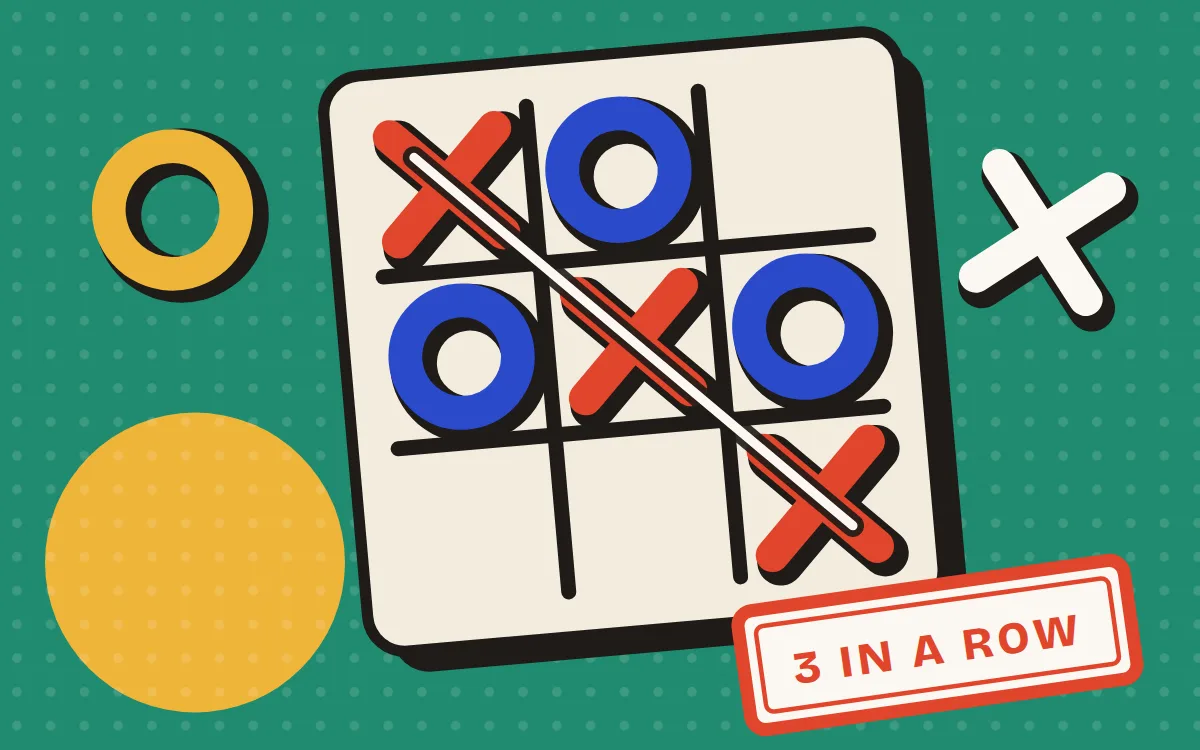
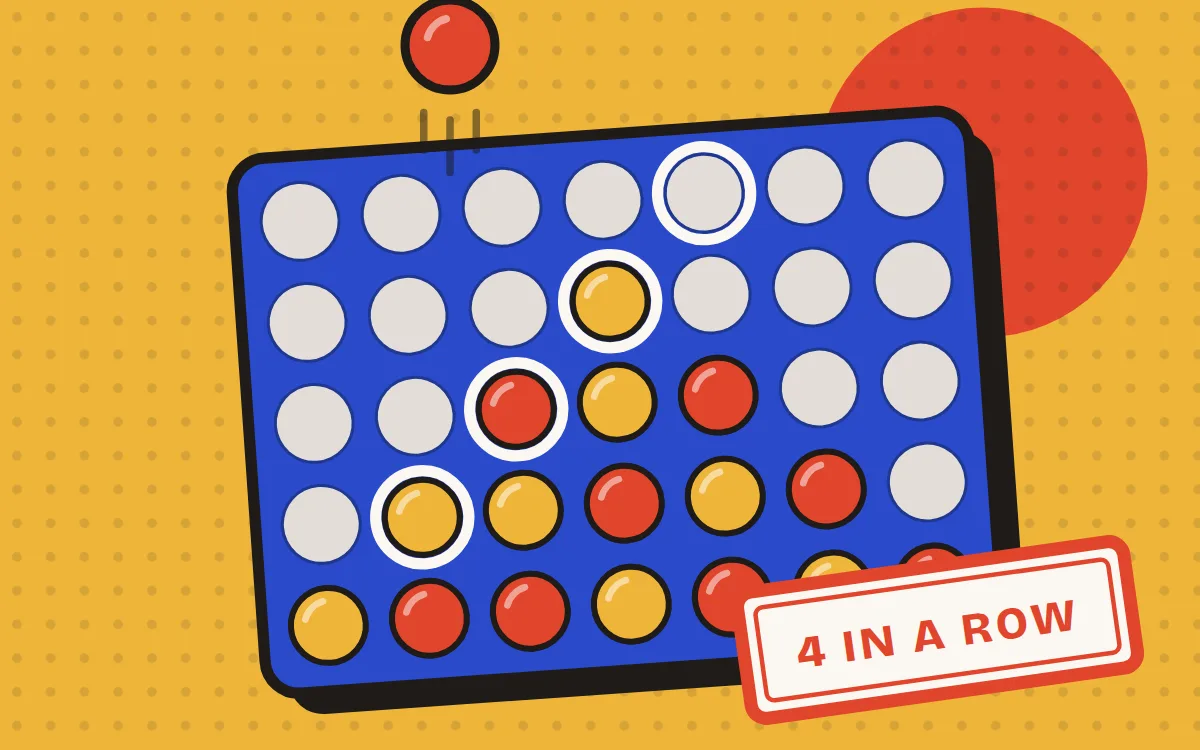
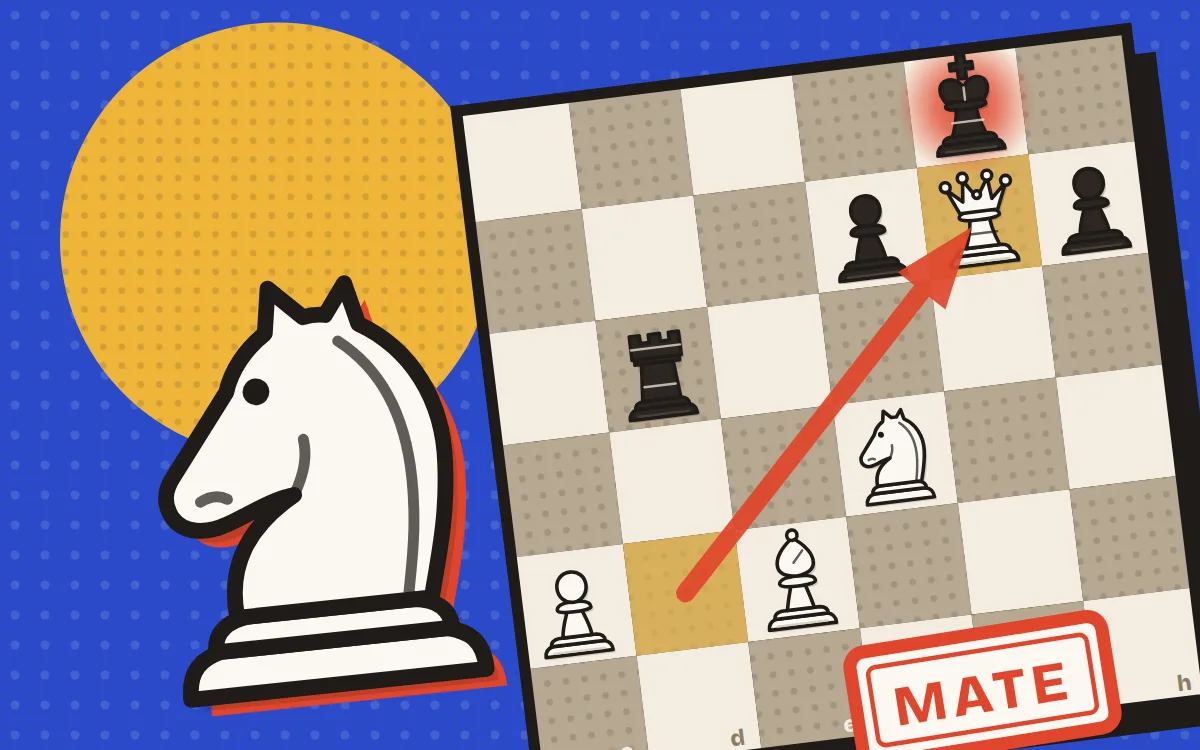
When you want a fresh challenge, send a friend the room link and play online, or share one screen. If you enjoy this kind of thinking, our guides to Tic Tac Toe strategy and how to win Connect Four show how planning ahead works in simpler grid games, and chess opening principles covers a similar idea of controlling the centre and saving your moves. Then come back to Reversi and test it.
Questions people ask
- What is the most important Reversi strategy?
- Control of moves matters most. Take corners, avoid giving corners away, and keep more legal moves than your opponent by playing quiet moves that flip few discs. The disc count only matters at the end, so do not try to flip as many discs as possible early in the game.
- Why should I avoid X-squares in Reversi?
- An X-square is the diagonal neighbour of a corner. If you play there while the corner is empty, your opponent can often flank your disc along the diagonal and take the corner, which can never be flipped. Avoid it until the corner is taken.
- What is parity in Reversi?
- Parity is about getting the last move in each separate region of empty squares near the end. An even region tends to favour the player who replies, and an odd region favours the player who enters first. It works best as a tie-breaker when other factors are equal.
- Is it good to have fewer discs in Reversi?
- Often, yes, in the opening and middle game. Fewer discs and a smaller frontier mean your opponent has fewer places to move, and you keep more safe moves for later. Near the end the count matters again, so aim to turn that mobility advantage into corners and stable discs.