VariantsRung
Rung variants: Sar, Double Sar, hidden trump and more
Court Piece has as many versions as it has family tables. This guide explains the variants you are most likely to meet, Sar and Double Sar above all, and is clear about which rules our game plays.
5 min readUpdated By PlayNest team
First, what our game plays
Our Rung game plays the plain, most widespread version of Court Piece. Four players in two partnerships, five cards to the caller, trump named from those five, a 4 and 4 deal to complete thirteen, follow suit if you can, and the first team to seven tricks wins the round. Every trick is won on its own. The full details are in Rung rules.
Two things can be changed in House rules: the match length (first to 5 or first to 7 points) and whether a Court, the first seven tricks in a row, counts double. Everything on the rest of this page describes rules other families use that our game does not play. They are worth knowing so you understand what changes when you sit at someone else's table.
Sar: tricks that wait in the middle
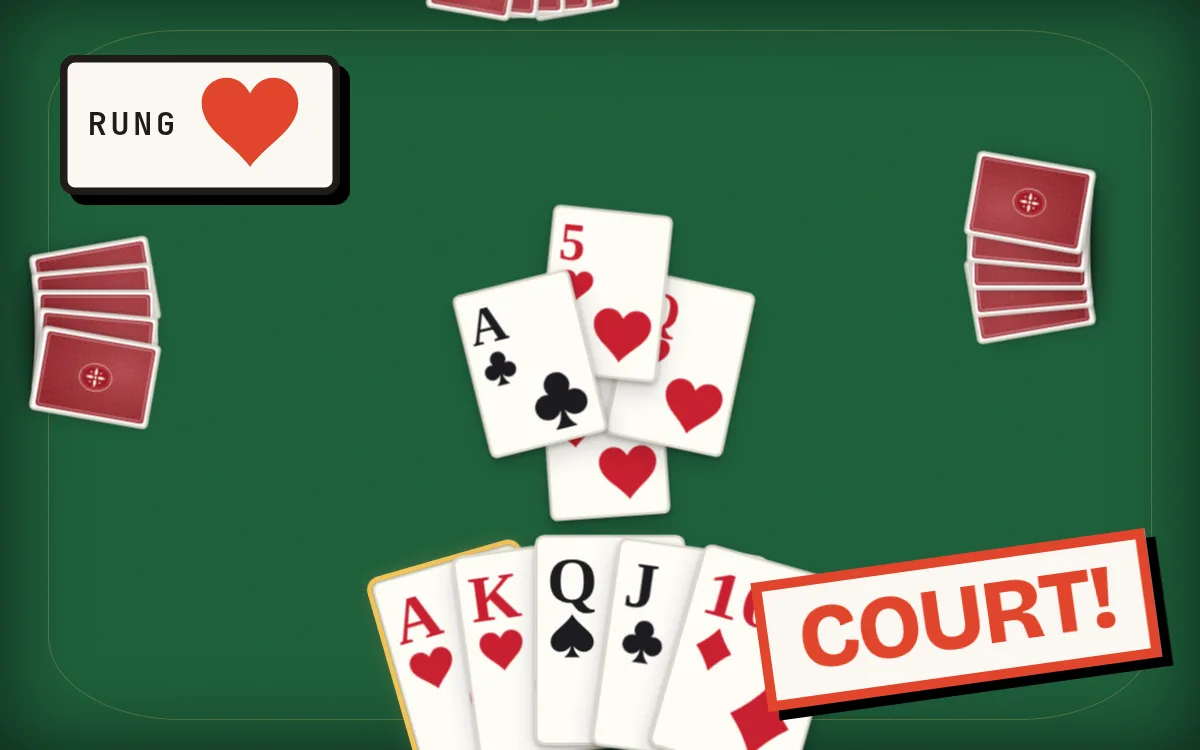
In the Sar style of Court Piece, a won trick is not taken straight away. The four cards are left in the middle, and the next trick is played on top. Tricks keep piling up until one player wins two tricks in a row. That player then collects the whole pile for their team, and each trick in it counts.
That changes the feel of the game completely. A single trick is worth nothing on its own; what matters is winning the trick after it too. A pile of five or six tricks can sit in the middle while both teams fight to win back-to-back, and one well-timed pair of wins can decide the round.
Families differ on the details. Common questions to settle before you play are: does the pair have to be won by the same player or just the same team, what happens to tricks still in the middle after the last card (often they go to whoever wins the final trick), and how many tricks a team needs to win the round.
Tip
If you play Sar, hold your Aces for the second trick of a pair. Winning the first trick of a pair with a low trump and the second with an Ace is the classic way to sweep a big pile.
Double Sar
Double Sar is a name used for stricter or higher-stakes versions of Sar, and it means different things in different homes. In some it means a team must win two pairs in a row before collecting. In others it simply doubles the points for a round won under Sar rules.
Because the meaning varies so much, the best advice is the simplest: ask the table what Double Sar means here before the first deal. If your family uses one of these versions, our plain game is still good practice for the core skills of calling trump, following suit and working with your partner.
Blind calls and other trump rules
A few more trump rules turn up at family tables:
- Calling blind. The caller names trump before looking at any cards, sometimes for a bonus if the team then wins.
- Trump from the next card. Instead of choosing, the caller turns up a card and its suit becomes trump.
- Finding the caller by deal. Cards are dealt face up one at a time until someone gets an Ace, and that player calls first. This comes from Hokm, Court Piece's Persian cousin; see Rung vs Hokm vs Spades.
Scoring variants
Scoring is where families differ most. Some play every round for one point and ignore the Court entirely. Some give the Court two points, as our game does by default. Others give extra points when the defending team, not the callers, wins the first seven tricks, because beating the trump caller that badly is harder.
Some tables play all thirteen tricks even after a team reaches seven, counting the full total for bragging rights. Our game stops at seven, because the result of the round cannot change after that.
How to agree rules before you play
Most Court Piece arguments are really arguments about variants. A quick checklist before the first deal saves a lot of noise:
- Are tricks won one by one, or do they wait in the middle as in Sar?
- Is trump announced openly or hidden?
- How much is a Court worth, and does a defenders' Court count more?
- How many points win the match?
Tip
Want the plain version with no arguments? Our game plays exactly that, with computer players in any empty seat. Read partnership strategy to get the most from it.
Questions people ask
- What is Sar in Court Piece?
- A style where won tricks stay in the middle until one player wins two tricks in a row. That player then collects the whole pile for their team.
- Does your Rung game support Sar or Double Sar?
- No. Our game plays the plain version where every trick is won on its own. You can change the match length and whether a Court counts double.
- What is Double Sar?
- A name for stricter or higher-stakes Sar rules. It means different things in different families, such as needing two pairs of wins or doubling the points, so agree on it before playing.
- What is band rung or hidden trump?
- A variant where the caller puts the trump card face down. Trump is revealed only when someone cannot follow suit and wants to cut.