VariantsBhabhi
Bhabhi house rules and variants families argue about
No two families play Bhabhi exactly the same way. Here are the common house rules, what each one changes at the table, and which of them you can switch on or off in our game.
5 min readUpdated By PlayNest team
Why Bhabhi has so many versions
Bhabhi was never printed in a rule book. It travelled from cousin to cousin at weddings and Eid gatherings, and every house added its own small twist. That is why a game can stop for five minutes while two aunts argue about whether the first trick counts.
The core never changes: follow suit if you can, a thulla stops the trick, the highest card of the led suit picks up, and the last player with cards is the Bhabhi. If any of that is new to you, start with the complete Bhabhi rules. This page is about the edges.
House rule 1: who starts the first trick
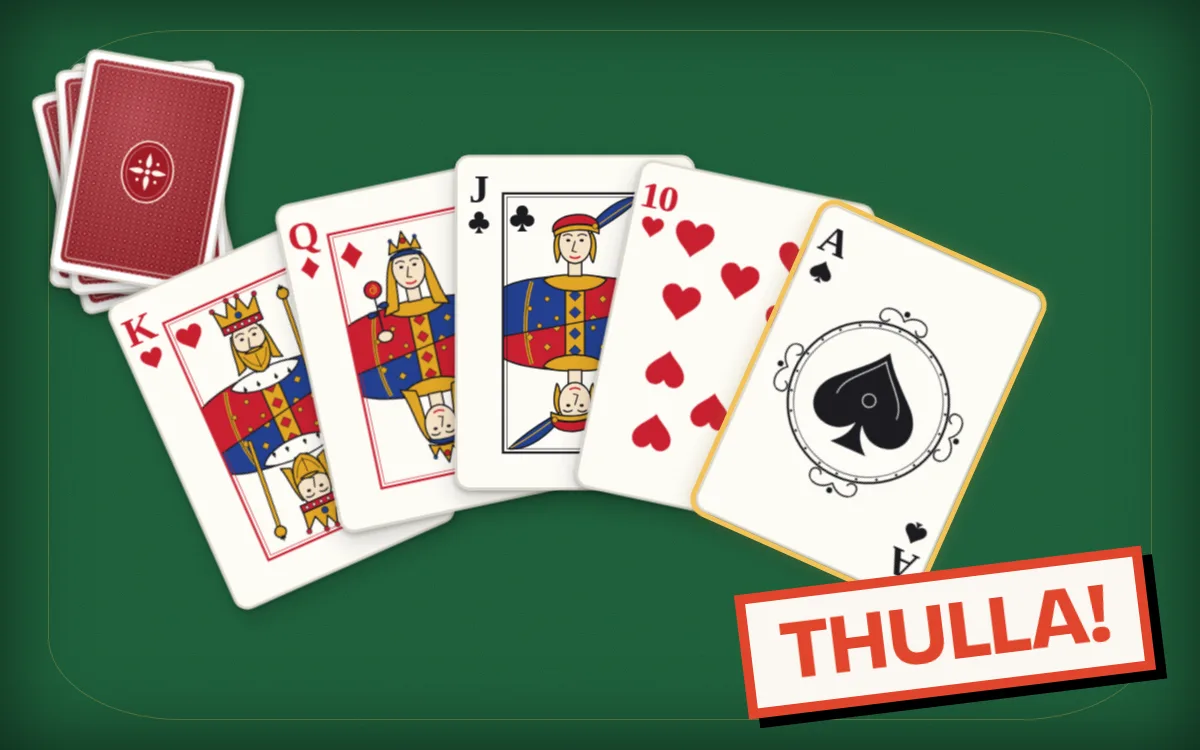
Ace of Spades starts. This is the most common rule in Pakistan and North India. Whoever is dealt the Ace of Spades must lead it. It is fair, because nobody chooses the opening, and it means the first trick is always a spade.
Open start. Some families let the player next to the dealer, or the dealer, lead any card. That gives the first player a small advantage, because they can lead a short suit and start building a void straight away.
In our Bhabhi game the Ace of Spades rule is on by default. Untick it under House rules on the setup screen and the first player at the table leads any card instead.
House rule 2: does the first trick count
First trick is free. On trick one, a player who has no spade may throw any card, but nobody picks up. The whole trick is set aside and the highest spade leads next. Families who play this way like that nobody gets punished before they have even sorted their cards.
First trick counts. Other families treat trick one like any other. A thulla on the opening spade means the highest spade picks up the pile. Since the Ace of Spades is usually the opening card, that player often ends up collecting the first thulla of the game, which is either very funny or very unfair depending on whose hand it is.
Our game has the free first trick on by default. Untick First trick is free to make the first trick count.
Tip
Agree on both house rules before the first deal. The arguments always start the moment someone realises the rule matters to their hand.
Other house rules you will meet
These are common at real tables. Our online game does not include them, so if your family plays one of them, it is worth knowing how it shifts the strategy.
- Passing cards at the start. Each player passes one to three cards to a neighbour before the first trick. It lets weak hands dump high cards and makes the first few tricks less predictable.
- Loser deals next. The Bhabhi of the last game shuffles and deals. It is mostly ceremony, and a good excuse for teasing.
- A running tally. Families who play all evening often keep paper scores of who has been the Bhabhi, sometimes spelling out a word one letter per loss. First to complete the word buys the chai.
- Two decks for a crowd. With seven or more players some groups shuffle two decks together. Duplicate cards make following suit easier and thullas rarer, so games run longer.
How each rule changes strategy
Small rule changes move the risk around the table. Thinking about them for a minute before you play can save you a pile later.
- With a free first trick, trick one is the perfect moment to get rid of a short suit. Throw a lone high card from a suit you want to empty, because it costs nothing.
- When the first trick counts, the Ace of Spades holder is exposed. If that is you, hope everybody has a spade, and plan to lead a long, low suit next.
- With an open start, the first leader should lead their shortest suit to begin building a void at once.
- With card passing, pass your highest cards in your longest suit, not your singletons. Keep the singletons so you can play them early and create voids.
Rules that are not really Bhabhi
Two things often get mixed into Bhabhi conversations but belong to different games. Matching the top card by number or suit, with special cards that skip or make players draw, is the family of games that includes Uno and our Satti. And building suits up and down from the sevens is Badam Satti, also known as Sevens.
If your family calls the game Laad, Getaway or Donkey, you are probably playing Bhabhi under another name; see Laad, Getaway and Donkey explained.
Setting up your rules online
On the setup screen, open House rules and set the two switches to match your family. When you host a room for friends, the rules you choose are the ones everybody plays, so tell the group before you deal. You can also pick 3 to 6 players, Easy or Smart computer opponents for empty seats, and the speed of the game.
Once your rules are agreed, the Bhabhi strategy guide will help you make the most of them.
Questions people ask
- Does the Ace of Spades always start in Bhabhi?
- In most Pakistani and Indian homes, yes. Some families let the first player lead anything. In our game the Ace of Spades rule is on by default and you can switch it off under House rules.
- Can you get a thulla on the first trick?
- It depends on the house rule. With First trick is free, nobody picks up on trick one. With it off, a thulla on the first trick works like any other and the highest spade picks up.
- Can I play Bhabhi with more than six people?
- Our online game supports 3 to 6 players with one deck. At home, big groups often shuffle two decks together, which makes thullas rarer and games longer.