Blog
Reglas del Chinchón: how to play Chinchón, and how it differs from rummy
If you already know rummy or gin rummy, you are halfway to Chinchón. This guide walks through the reglas del chinchón step by step, shows exactly where the Spanish game breaks from rummy, and gives the beginner strategy that follows from those differences.
8 min readUpdated By PlayNest team
What is Chinchón?
Chinchón is a Spanish card game of the rummy family, played with the baraja española by 2 to 4 players, each for themselves. You draw and discard to build sets and runs in your hand, then try to close the hand before anyone else. The cards you could not meld count against you, and a player whose total goes over 100 is out. The last player standing wins.
The game is named after the town of Chinchón near Madrid, and it is a family favourite not only in Spain but also in Argentina and Uruguay, where house rules such as the enganche come from. If you want to try it while you read, you can play Chinchón online free against the computer or with friends.
The cards: the Spanish deck
Chinchón uses the Spanish deck, with four suits: Oros (coins), Copas (cups), Espadas (swords) and Bastos (clubs). Each suit runs from 1 (the As) to 9, followed by three figures: the Sota (10), the Caballo (11) and the Rey (12). That is the 48-card deck. Many tables use the 40-card deck instead, which simply removes the 8s and 9s.
Most games also add jokers, called comodines. You can play with none, one or two. Our version defaults to 48 cards and 2 jokers, and if the Spanish suits are new to you, a toggle switches to a French-suited deck: Oros as Diamonds, Copas as Hearts, Espadas as Spades and Bastos as Clubs.
Reglas del chinchón: the deal and a turn
Each player gets 7 cards. The next card is turned face up to start the discard pile, and the rest of the deck becomes the stock. Play goes counter-clockwise, to the right, as is traditional in Spain.
A turn always has the same two steps:
- Draw one card: the top card of the stock, or the top card of the discard pile.
- Discard one card face up onto the pile, so that you end your turn with 7 cards again.
Tip
If the stock runs out, the discard pile (except its top card) is shuffled into a new stock and the hand carries on.
Melds: sets and escaleras
Your goal during a hand is to arrange your 7 cards into melds, which Spanish players call combinaciones. There are two kinds:
- Sets: 3 or 4 cards of the same number in any suits, such as three 7s or four Reyes.
- Runs (escaleras): 3 or more consecutive cards of the same suit, such as the 3, 4 and 5 of Bastos. In the 40-card deck the 7 is followed directly by the Sota.
- Jokers can stand in for any card in either kind of meld.
Card values: why low is good
When a hand ends, every card you have not melded is added to your score. The Sota, Caballo and Rey count 10 each, every other card counts its number, and a joker left loose costs 25. Because your total only ever grows (apart from the minus 10 bonus below), Chinchón is a game of keeping your score low. Going over the limit of 100 points, or 50 in a shorter game, eliminates you.
How to close: cerrar and menos diez
Closing (cerrar) is how a hand ends. After drawing, you may close if all your cards are melded except at most one loose card whose value is within the closing limit. The limit is usually 3 points, and in our game you can set it to 0, 3 or 5. You close by placing your discard face down.
If all 7 cards are melded with no loose card at all, you close with minus 10 (cerrar con menos diez): 10 points come off your total. After a close, the other players lay down their melds, may add matching cards to the closer's melds (laying off, usually allowed), and score whatever is left in their hands.
Tip
A loose 1 or 2 is almost free. A loose Rey is 10 points. When someone might close soon, the cheapest hand is the safest hand.
The chinchón: the run that wins everything
The game's namesake is the best hand of all: seven consecutive cards of one suit with no joker, such as the 1 to 7 of Copas. Make a chinchón and you win the whole game at once, no matter how the scores stand. It is rare, but it means no game of Chinchón is ever truly lost while you are still in it.
Some tables also play the enganche: a player who has been eliminated may buy back in once, with the score of the highest player still in. It needs at least 3 players and 2 still in the game. In our version it is an option you can switch on.
Chinchón vs rummy and gin rummy: the key differences
Chinchón is often described as Spanish rummy, and the family resemblance is real: draw, discard, build sets and runs. But the details change how you should play. Here is how it compares with basic rummy and with gin rummy, the version most English speakers know.
- Cards and deck: rummy and gin rummy use the 52-card French deck. Chinchón uses the 40 or 48-card Spanish deck, usually with jokers.
- Hand size: gin rummy deals 10 cards and basic rummy often more. Chinchón deals only 7, so every single card matters.
- Where melds go: in basic rummy you lay melds on the table as you make them. In Chinchón, as in gin rummy, melds stay hidden in your hand until someone closes.
- Ending the hand: in gin rummy you can knock with up to 10 points of unmatched cards. In Chinchón you may have at most one loose card, worth no more than 0, 3 or 5 points.
- The bonus: gin rummy rewards going gin with a bonus. Chinchón rewards a fully melded close with minus 10 on your own score.
- How you win: gin rummy is a race to 100 points. Chinchón is the opposite: reach 100 and you are out, and the last player left wins.
- The instant win: nothing in rummy matches the chinchón, the natural seven-card run that ends the game immediately.
What the differences mean for your strategy
Players coming from gin rummy tend to make two mistakes. First, they hold high cards too long, because in gin a few points of deadwood are fine. In Chinchón, with a closing limit of 3, a hand with a loose Caballo cannot close at all, and if someone else closes, that Caballo costs you 10. Second, they think about their own score only. Because Chinchón is an elimination game, the scores of your opponents matter just as much: a quick close that pushes a rival over 100 can be worth more than waiting for your own perfect hand.
The short hand of 7 cards also changes the rhythm. A hand can end after only a few turns, especially with two jokers in play, so you should always ask what your hand would cost if someone closed right now.
Chinchón strategy for beginners
These habits will win you more hands from your very first game:
- Shed high loose cards early. Figures and 8s or 9s that do not fit a meld are the first to go.
- Keep flexible cards. A card that could join either a set or a run, such as the 5 of Oros when you hold the 4 of Oros and the 5 of Copas, is worth more than one that fits only one meld.
- Pick up from the pile with care. Every card you take face up tells the table what you are collecting.
- Read the pile. Note what your opponents pick up, and avoid discarding cards that fit their melds.
- Count the jokers. With two in play, assume someone could close at any moment and keep your loose cards cheap.
- Do not marry a joker. It completes any meld, but loose in your hand it costs 25 points.
- Choose when to chase minus 10. If you are safe and the table is slow, wait for it. If an opponent is close to 100, close now and let the scores do the work.
- Chase a chinchón only when it is cheap to do so. Five cards in a row in one suit early in a hand is a reason to try, but never at the cost of a safe close.
House rules you can choose
Chinchón changes from table to table, so our version lets you set the most common variations before you start: a 40 or 48-card deck, 0, 1 or 2 jokers, a closing limit of 0, 3 or 5, an elimination limit of 100 or 50, laying off on the closer's melds on or off, and the enganche on or off. If your family plays a particular way, set it up once and play your rules every time.
Play now: Chinchón online, free
The fastest way to learn the reglas del chinchón is to play a few hands. Play Chinchón online free in your browser with no download and no sign-up: practise against the computer on Easy, Normal or Hard, or open a room and share the link or code with friends on WhatsApp. The computer fills any empty seat.
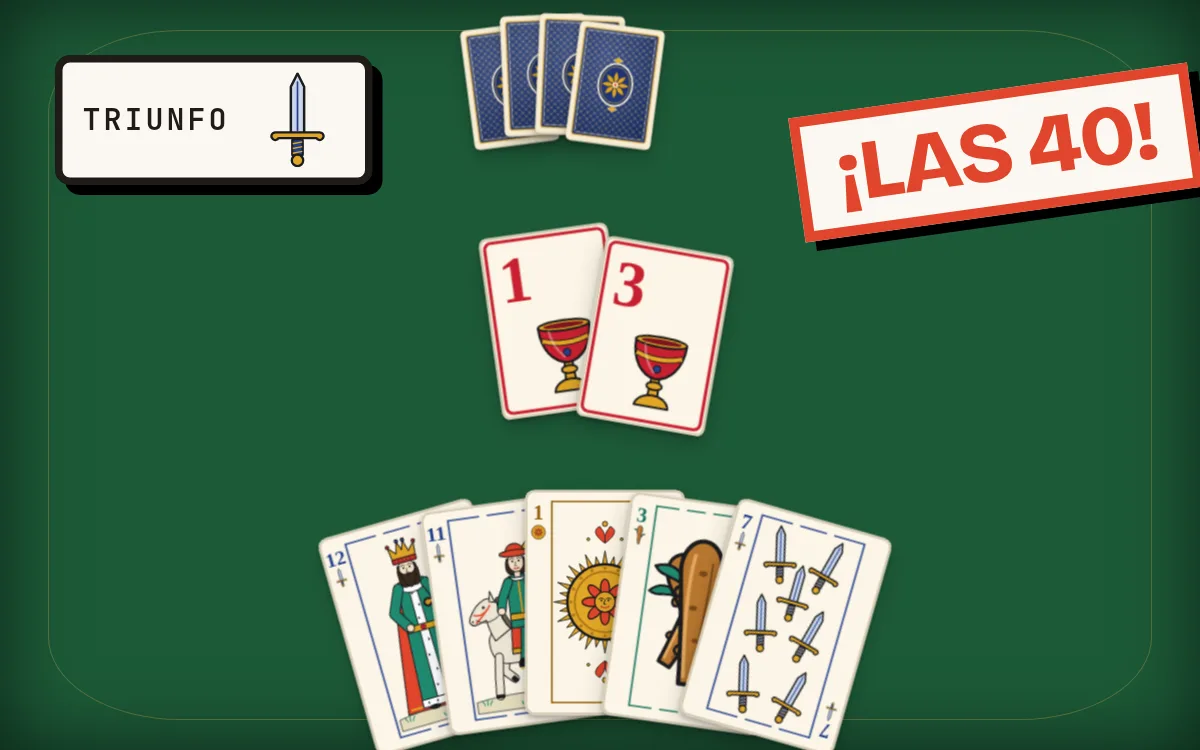
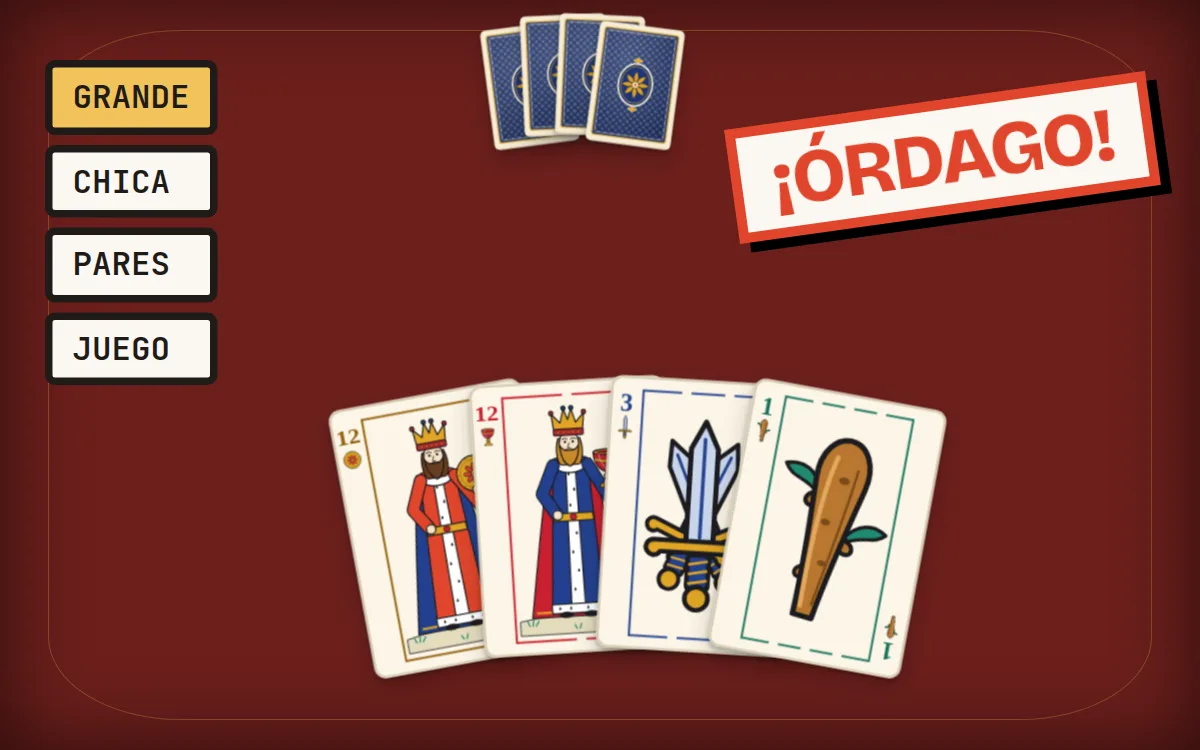
Enjoy Spanish card games? Try Tute, the trick-taking game of cantes and las cuarenta, or Mus, the Basque partnership game of bets, órdago and señas, both with the same Spanish deck. To learn them first, read our guides to Tute rules and how to play and Mus rules and señas.
Questions people ask
- How many cards does each player get in Chinchón?
- Each player gets 7 cards. On every turn you draw one and discard one, so you always end your turn with 7. A finished hand is usually one meld of 3 cards and one of 4.
- Can you close in Chinchón with a card left over?
- Yes, with one loose card worth no more than the closing limit, usually 3 points. Closing with no loose card at all scores minus 10.
- What is a chinchón worth?
- A chinchón, seven consecutive cards of one suit without a joker, wins the whole game at once, whatever the scores are.
- Is Chinchón harder than gin rummy?
- It is not harder to learn, but it is less forgiving. With only 7 cards and a strict closing limit, a single high card can stop you closing, and every hand can push a player out of the game.
- Can I play Chinchón online with friends?
- Yes. Open a room in our Chinchón game, share the link or the 6-character code, and play with 2 to 4 people. Computer players fill any empty seats.