Blog
Reglas del mus: how to play Mus and read the señas
Mus is the Basque card game that half of Spain plays after lunch, and it looks baffling the first time: four people, four cards each, lots of talk about envido and órdago, and partners pulling faces at each other. This guide explains the rules of Mus step by step, walks through one full hand, and lists the señas del mus so you can read your partner from the first deal.
9 min readUpdated By PlayNest team
Mus in one minute
Mus is a betting game played with cards, not a trick-taking game. Four players sit in two pairs, partners opposite. Each player gets four cards from the 40-card Spanish deck. Then the two pairs bet on four separate questions, called lances: who has the highest cards (Grande), who has the lowest (Chica), who has the best matching cards (Pares) and who has the best total (Juego). Bets are paid in piedras, and the first pair to 40 piedras wins the game.
Two things make Mus unlike any other card game. You can bluff, because bets are made before anyone shows their cards. And you are allowed to tell your partner what you hold, but only with agreed facial signals, the señas. If you would rather learn by playing, you can play Mus online free against the computer while you read.
What you need: the deck, the seats and the mano
Mus uses the baraja española without 8s and 9s: As, 2, 3, 4, 5, 6, 7, Sota, Caballo and Rey in Oros, Copas, Espadas and Bastos. Suits are irrelevant. Most people play a 8 reyes, where every 3 counts as a Rey and every 2 counts as an As, which gives eight kings and eight aces. Some tables play a 4 reyes, with every card as itself.
The player to the dealer's right is the mano. The mano speaks first in everything and wins every tie, and the role moves one seat to the right after each hand, because play in Spain goes counter-clockwise. Remember the mano: half of Mus strategy is about who wins ties.
Reglas del mus, step 1: the mus phase
After the deal, each player in turn, starting with the mano, says either Mus or No hay mus. Mus means I would like to change cards. No hay mus means I am keeping my hand. If all four say Mus, every player discards between one and four cards and draws replacements, and the question goes round again. The moment anyone says No hay mus, the changing stops and the betting starts.
This phase is quick, but it already gives information away. A player who cuts the mus straight away usually has something worth keeping.
Step 2: the four lances
The lances are always played in the same order, and each one is a separate contest with its own bets:
- Grande: the highest hand wins. Compare best cards first, then the next, and so on. Rey (and 3) is the top card.
- Chica: the lowest hand wins. As (and 2) is the bottom card, so four of them is the perfect Chica.
- Pares: a par (pair) is worth 1 piedra, medias (three of a kind) 2, duples (two pairs or four of a kind) 3. Everyone first says whether they have pares. If both pairs have them, there is betting; if only one does, it scores them without a bet; if nobody does, the lance is skipped.
- Juego: add up your cards, with figures worth 10 and everything else its face value (with 8 reyes, 3s are 10 and 2s are 1). 31 or more is juego. The order is 31, 32, 40, 37, 36, 35, 34, 33. A 31 is worth 3 piedras, any other juego 2. Players declare juego just as they declare pares.
- Punto: if nobody has juego, the highest total of 30 or less wins instead, worth 1 piedra.
Tip
Ties in every lance go to the player closest to the mano. Two identical Grande hands? The one nearer the mano wins.
Step 3: betting with envido, quiero and no quiero
In each lance, starting with the mano, a player may say Paso (pass), Envido (bet 2 piedras), Envido 5, or Órdago (bet the whole game). The other pair answers, and either partner may answer for both:
- Quiero accepts. The bet is paid at the end of the hand, when cards are shown.
- No quiero refuses. The betting pair collects at once: 1 piedra for a first bet, or the amount already accepted if there were raises. This is the deje.
- A raise (2 more, 5 more) sends the decision back to the other side.
- Órdago answered with quiero means the cards are shown immediately and the winner of that lance wins the whole game.
- If everyone passes, the lance is played en paso: the best hand still wins it, and Grande or Chica are worth 1 piedra at the end.
Step 4: scoring, amarracos and winning
Five piedras make an amarraco, the traditional unit people keep on the table. A game, called a juego, goes to 40 piedras (30 in shorter games). At the end of each hand the cards are shown and the count goes in order: Grande, Chica, Pares, Juego or Punto. Each winner takes the accepted bet for that lance, and the winners of Pares and Juego also collect the value of their own pair's pares and juego. Punto adds 1. The count stops as soon as a pair reaches the target.
Matches are often played as a vaca, the best of three games, and a full partida is the best of three vacas.
A worked hand, a 8 reyes
Rules are easier to follow with real cards. You are the mano. Your hand is Rey, Caballo, Caballo, As: a par of Caballos, and a total of 10 + 10 + 10 + 1 = 31, the best juego. Your partner holds 3, 2, 2, 5, which a 8 reyes reads as Rey, As, As, 5: a par of Ases and a strong Chica, but only 17 points. On the other side, the first opponent has Rey, Rey, Sota, 6 (a par of Reyes, 36 points) and the second has 7, 6, 4, As (no pares, 18 points).
Before the bets you wink to your partner (juego de 31) and your partner shows the tip of the tongue (dos ases). Now the lances:
- Grande: you pass, the first opponent bets envido, and your pair says no quiero. The opponents take 1 piedra now. Their two Reyes would have beaten you anyway.
- Chica: you bet envido, knowing your partner has two Ases. The opponents say no quiero. You take 1 piedra now.
- Pares: you, your partner and the first opponent say yes, the second opponent says no. Both sides have pares, so there is betting. The first opponent bets and you refuse, since a par of Reyes probably beats your Caballos and your partner's Ases. They take 1 piedra now.
- Juego: you and the first opponent have juego. You bet envido and they accept, because 36 is a good juego. When the cards are shown, your 31 beats their 36.
Counting the worked hand
Refused bets were already paid: 1 to the opponents for Grande, 1 to you for Chica, 1 to the opponents for Pares. At the end, Grande and Chica add nothing more because their bets were refused. Pares goes to the par of Reyes, so the opponents collect 1 more for their pares. Juego goes to your 31: you take the 2 accepted piedras plus 3 for the 31.
Final score for the hand: your pair 6 piedras, the opponents 3. Notice what decided it: the señas told you where your strength was, so you bet the lances you could win and refused the ones you could not.
Señas del mus: the complete list of common signals
Señas are agreed signals, and using them is fair play in traditional Mus. The trick is doing it when the opponents are looking elsewhere. Tables can agree extra signals or ban them altogether, so ask before you sit down. These are the common señas:
- Dos reyes: bite your lower lip.
- Tres reyes: bite your upper lip.
- Dos ases (pitos): show the tip of your tongue in the middle of your mouth.
- Tres ases: show your tongue at one side of your mouth.
- Duples: raise your eyebrows.
- Medias: twist your mouth to one side.
- Juego de 31 (la una): wink.
- Ciego (no pares and no juego): close both eyes.
How to use señas well
Signal your best feature, not everything. If you have duples and 31, decide which one your partner most needs to know about given the score. Send señas early, before the lances that depend on them, and watch your partner at the moments when the opponents look at their own cards.
Watch the opponents too. A careless bite of the lip from across the table is worth more than any card you hold. In our game, your computer partner sends señas you can see, with their meaning, and reads the ones you send from the señas panel; the opponents signal each other, and now and then you catch one.
Tip
Do not trust a seña blindly. Your partner shows what they hold, not what the opponents hold. Two Reyes is strong, but four Reyes across the table is stronger.
Five mistakes beginners make
- Forgetting the mano. A tie is not a draw in Mus: it belongs to whoever is closer to the mano.
- Betting every lance. Strong players pass Grande and Chica often and save their piedras for the lances they can win.
- Ignoring the declarations. When a player says they have no pares, that is free information.
- Firing órdagos too early. An órdago at 5 to 5 risks the whole game for a few piedras of advantage.
- Forgetting the counting order. Near 40, Grande is counted first, and a small Grande win can end the game before your 31 is counted.
If you like Mus, try Tute and Chinchón
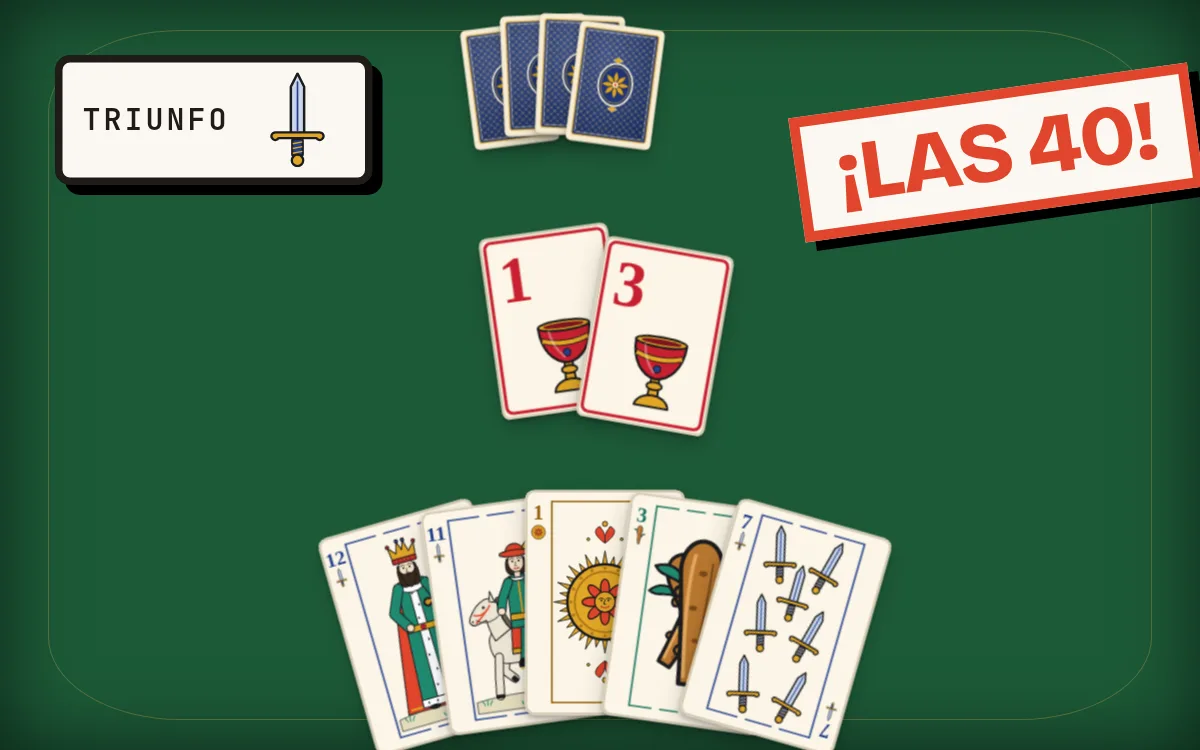
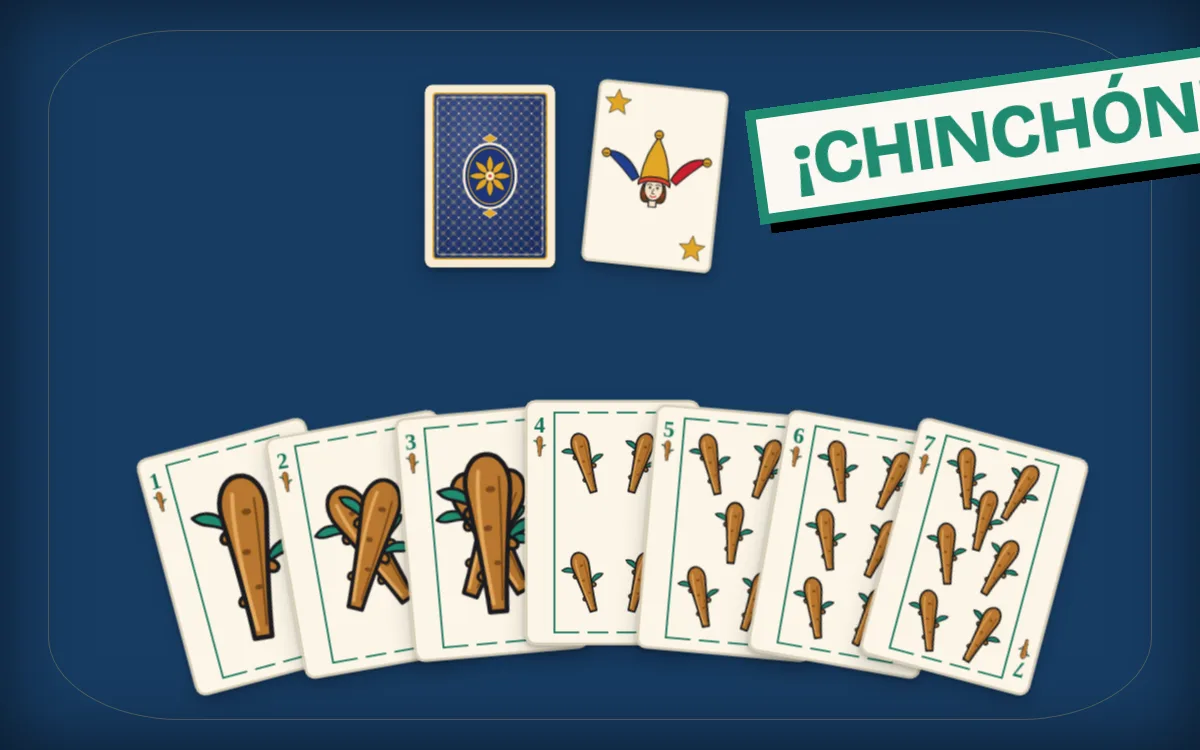
Mus is all about betting and bluffing. If you want a Spanish card game with tricks, trumps and cantes, try Tute, the classic of las veinte and las cuarenta; our Tute rules guide explains it. If you prefer forming sets and runs, Chinchón is the Spanish rummy that families play from Madrid to Buenos Aires; see our Chinchón rules and strategy guide. All three use the same baraja española.
Play Mus now
The fastest way to learn the reglas del mus is to play a few hands. Open Mus and play against the computer on Easy, Normal or Hard, with señas switched on so you see your partner's signals and their meaning. When you feel ready, open a room and send the link to three friends, or to one or two, and let the computer fill the other seats. It is free in the browser on your phone or computer, with no download and no sign-up. Play now and see how long it takes before you call your first órdago.
Questions people ask
- How do you play Mus step by step?
- Deal four cards each, decide whether to change cards (Mus or No hay mus), then bet on four lances in order: Grande, Chica, Pares and Juego (or Punto). Refused bets are paid at once; accepted bets are paid when cards are shown at the end. The first pair to 40 piedras wins.
- Are señas allowed in Mus?
- Yes, in traditional Mus the agreed señas are part of the game, as long as everyone uses the same set. Some tables play sin señas, without signals, so agree before you start. Talking about your cards is never allowed.
- What is the best hand in Mus?
- There is no single best hand, because each lance is a separate contest. Four Reyes wins Grande and makes duples, but only adds up to 40, the third best juego. A hand that wins Chica will rarely win Grande. Good players think lance by lance.
- Is Mus hard to learn?
- The rules take about ten minutes; reading opponents takes much longer. Start with the order of the lances and the values of pares and juego, play a few hands against the computer with señas on, and the rest follows.
- Can I play Mus online with friends for free?
- Yes. On PlayNest you open a room, share the link or the 6-character code, and the computer fills any empty seats. It is free and runs in the browser, with chat and optional voice in the room.