Blog
How to play Tute: the rules, cantes and scoring explained
Tute is the Spanish card game of tricks, points and cantes. This guide walks through the reglas del tute in the order you meet them at the table: the deck, the deal, the arrastre rules, singing las veinte and las cuarenta, and counting the points, with worked examples and the mistakes beginners make.
9 min readUpdated By PlayNest team
Tute in a nutshell
Tute is a trick-taking game for 2, 3 or 4 players, played with the 40-card Spanish deck. Every card goes into tricks, the highest card or the highest trump wins each trick, and at the end of the hand you add up the points in the cards you won. On top of that, a player who holds the Rey and Caballo of one suit can sing them for 20 points, or 40 in trumps, and a player who holds all four Reyes or all four Caballos wins the hand at once.
That is the whole idea. The rest of this guide explains each rule as you will meet it, so by the end you can sit down and play Tute online free without checking anything. If you already know Brisca, you are halfway there: the card order and values are the same.
What you need: the baraja española
The Spanish deck, the baraja española, has four suits: Oros (coins), Copas (cups), Espadas (swords) and Bastos (clubs). Each suit has ten cards for Tute: As, 2, 3, 4, 5, 6, 7, then Sota (10), Caballo (11) and Rey (12). There are no 8s and 9s, so the deck has 40 cards.
If you have only ever played with French cards, think of Oros as Diamonds, Copas as Hearts, Espadas as Spades and Bastos as Clubs, with the Sota as a Jack, the Caballo as a Queen and the Rey as a King. Our game has a switch for exactly this, so you can learn the rules with the cards you know and move to the Spanish deck later.
Step 1: the deal and the trump suit
How the cards are dealt depends on the number of players:
- Four players (tute por parejas): two teams, partners sitting opposite. Each player gets 10 cards.
- Three players: the 2 of Oros is taken out, leaving 39 cards, and each player gets 13. Everyone plays alone.
- Two players (tute a dos or tute con robo): each player gets 8 cards, the next card is turned face up under the stock, and the rest is a stock to draw from.
Tip
With 3 or 4 players the dealer's last card is shown to the table, and its suit is the trump suit, the triunfo or pinta, for the whole hand. With 2 players the face-up card under the stock shows the trump.
Step 2: card order and winning a trick
Here is the rule that trips up every beginner. In each suit the cards rank, from highest to lowest: As, 3, Rey, Caballo, Sota, 7, 6, 5, 4, 2. The 3 is the second best card in its suit, above the Rey. Say it out loud a few times before your first game.
A trick works like this. One player leads any card. Going round to the right, counter-clockwise as in Spain, each other player adds one card. If any trumps were played, the highest trump wins. Otherwise the highest card of the suit that was led wins. A card of a third suit, neither led nor trump, can never win. The winner collects the trick and leads the next one.
Step 3: the arrastre rules (what you must play)
Tute is not a free-for-all. The obligations, together called arrastre, decide which of your cards you may play. With 3 or 4 players they apply from the first trick to the last. In two-player Tute they only start once the stock is empty.
- If you can follow the suit that was led, you must.
- When following suit, you must beat the card that is currently winning the trick if you can. This is montar.
- If you have none of the suit led, you must play a trump. This is fallar.
- If someone has already trumped, you must play a higher trump if you can. If you cannot, you may play any card.
- If you have neither the suit nor a trump, you may play any card.
An arrastre example
Four players, Ana and Carlos against Beatriz and David, sitting in the order Ana, Beatriz, Carlos, David. Espadas are trumps. Ana leads the 5 of Copas.
Beatriz holds the Caballo and the 4 of Copas. She must follow suit, and she must beat the 5 if she can, so the 4 is not allowed: she plays the Caballo. Carlos has no Copas at all, so he must trump, and he plays the 2 of Espadas. David has no Copas either. The trick is already trumped, so he must overtrump if he can: he holds the 7 of Espadas and has to play it. Had Carlos trumped with the As of Espadas instead, David could not overtrump, and he could have played any card he liked.
One more rule matters in four-player games. Strict Tute says you must beat the winning card even when it belongs to your partner. That is how our game plays by default, and a house rule lets you turn it off so you need not beat a trick your partner is already winning.
Step 4: cantes, las veinte and las cuarenta
If you hold the Rey and the Caballo of the same suit, you can sing them, cantar. In an ordinary suit they are worth 20 points, las veinte. In the trump suit they are worth 40, las cuarenta.
You may only sing straight after winning a trick, before you lead the next card, and only one cante for each trick you win. In tute por parejas the winner of the trick sings, not their partner. Each suit can be sung only once in a hand.
The greatest cante of all is the tute: all four Reyes or all four Caballos. Sung after winning a trick, it wins the hand outright, whatever the points say.
Tip
If you hold both las cuarenta and las veinte, sing the 40 first. You might only win one more trick.
Step 5: counting the points
When the last card is played, each side counts the points in the tricks it won. Only five ranks score:
- As: 11
- 3: 10
- Rey: 4
- Caballo: 3
- Sota: 2
- 7, 6, 5, 4, 2: nothing
A scoring example
The cards in the deck add up to 120, and the winner of the last trick adds 10 more, las diez de últimas, for 130 in total. Then the cantes are added on top.
Suppose your team's tricks hold three Ases (33), two 3s (20), three Reyes (12), two Caballos (6) and all four Sotas (8). That is 79 card points. You sang las cuarenta and took the last trick: 79 + 40 + 10 = 129. The other team has the remaining 41 card points and sang las veinte: 61. You win the hand comfortably.
Notice what happened: the opponents won tricks, but cards without points do not help. If the totals ever come out level, the side that took the last trick wins. A match is played to 3, 5 or 7 hands won, so one big hand does not settle everything.
Reglas del tute para dos: the stock and the seven
Two-player Tute, often called tute con robo, adds a stock. After each trick the winner draws the top card first, then the other player, and the face-up trump card is the very last card to be drawn. While cards remain in the stock you may play any card you like: no following suit, no beating, no trumping required. As soon as the stock runs out, the full arrastre rules from Step 3 apply.
There is also the swap of the seven. If you hold the 7 of trumps and the face-up trump card is a figure, an As or a 3, you may swap your 7 for it on your lead after winning a trick. If the face-up card is lower than the 7, the 2 of trumps does the swap instead. Cantes work exactly as in the bigger games.
Five mistakes beginners make in Tute
Most lost hands in a first week of Tute come from the same handful of errors:
- Treating the 3 as a small card. It is worth 10 points and beats everything except the As. Throwing it on an opponent's trick is a ten-point gift.
- Forgetting that singing needs a trick. A pair in your hand is worth nothing until you win a trick with any card. Plan how you will get the lead.
- Breaking up your own pair. Under arrastre you may be forced to beat a trick with your Rey or Caballo. Keeping a spare card in that suit gives you a choice.
- Ignoring las diez de últimas. Ten points for the last trick swing many close hands. Save a strong trump for the end.
- Spending strong cards early in tute a dos. While the stock lasts nobody has to follow suit, so your As can be trumped for free. Use cheap cards until arrastre starts.
Tute, Mus and Chinchón: which Spanish card game next?
Tute is the natural first Spanish game: the rules are clear, a hand is quick, and the scoring teaches you the value of every card. Once it clicks, two other classics use the same deck in very different ways.
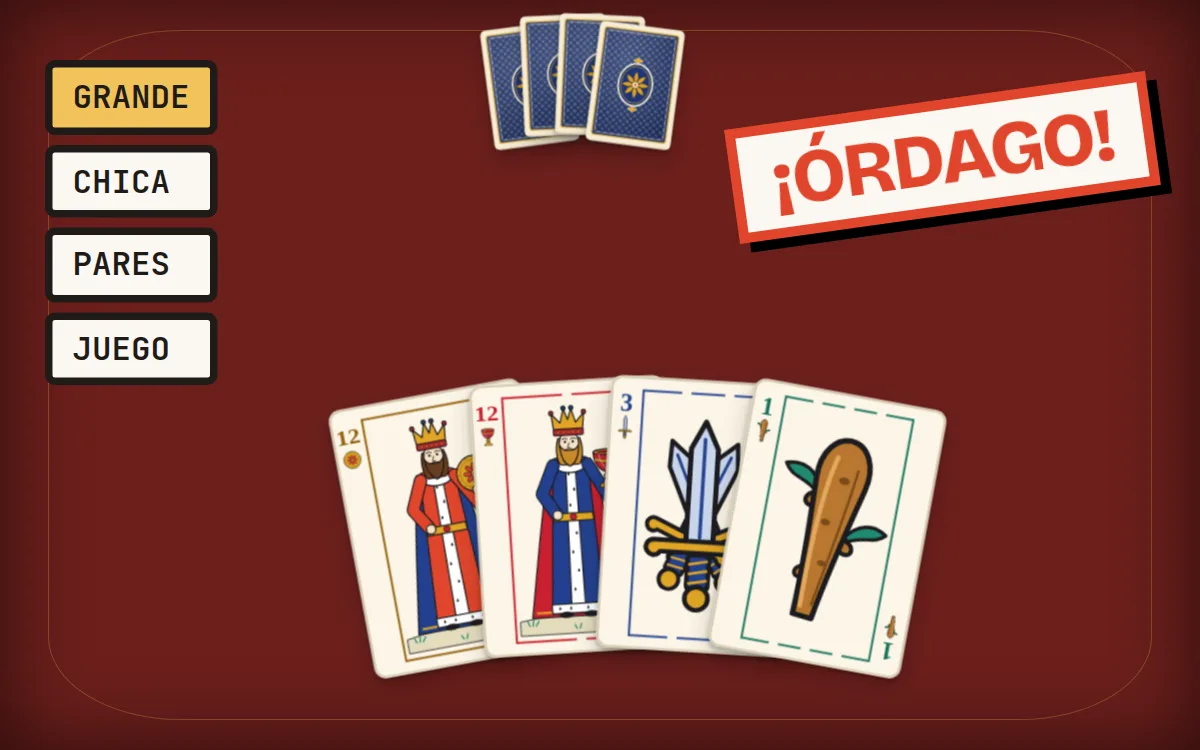
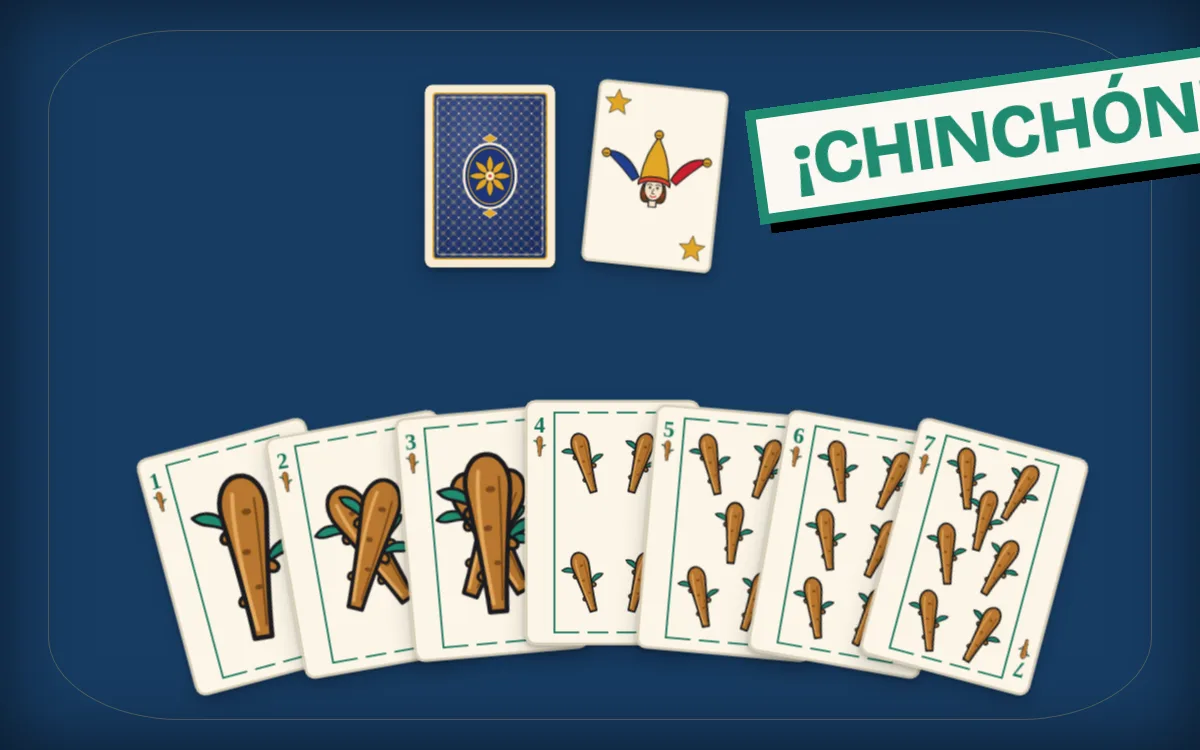
Mus is the Basque bluffing game for two pairs, where you bet on four lances, signal your partner with señas and can stake the whole game on a single órdago. Chinchón is the Spanish rummy: draw and discard to build sets and escaleras, close when you can, and dream of a seven-card chinchón that wins at once. Both are free on PlayNest with the same deck art, computer opponents and online rooms.
To learn them next, read our Mus rules and señas guide, which walks through a full hand and every common signal, and our Chinchón rules and strategy guide, which compares it with rummy and gin rummy.
Play now: try Tute against the computer or with friends
The fastest way to learn the reglas del tute is to play a few hands. Open Tute and start against the computer on Easy: the game highlights the cards you are allowed to play, so arrastre becomes second nature within a few tricks. When you are ready, Normal counts points and saves its trumps, and Hard tracks every card and simulates the remaining hands.
To play with friends, open a room and send the link or the six-character code, for example on WhatsApp. The computer fills any empty seat, so two or three of you can still play tute por parejas. It is free, it runs in the browser on phone or computer, and there is nothing to download. Play now and sing your first cuarenta.
Questions people ask
- How do you play Tute step by step?
- Deal the cards and turn up a trump. Players take turns adding one card to each trick, following suit and beating the winning card when they can. The highest trump, or the highest card of the suit led, wins. Winners may sing a Rey and Caballo pair. At the end, count card points, cantes and 10 for the last trick.
- How many cards does each player get in Tute?
- With four players each gets 10 cards. With three players the 2 of Oros is removed and each gets 13. With two players each gets 8 and draws from the stock after every trick.
- How many points do you need to win a hand of Tute?
- There is no fixed number. The side with more points at the end of the hand wins it, counting card points, cantes and the 10 for the last trick. A tie goes to the side that won the last trick, and a sung tute wins the hand outright.
- Can your partner sing in tute por parejas?
- Only on a trick they won themselves. The right to sing belongs to the player who just won the trick, once per trick, before leading the next card.
- What are las diez de últimas?
- They are the 10 extra points for winning the last trick of the hand. With them, the total in each hand is 130 points before cantes.