Other namesChess
Shatranj: the old name of chess, and how the game changed
In Urdu, chess is still called shatranj. The word also names the older game that travelled from India to Persia and the Arab world. Here is what changed, and what the Urdu names mean.
3 min readUpdated By PlayNest team
Two meanings of one word
Ask anyone in Pakistan to play shatranj and they will set up a normal chess board. In everyday Urdu, shatranj simply means chess, the same game played in tournaments everywhere and in our free chess game.
Historians use the same word for something more specific: the medieval game played in Persia and the Islamic world for centuries, before European players changed a few pieces around 500 years ago and created modern chess. Knowing both meanings explains a lot about chess words we still use.
From chaturanga to shatranj
The earliest known ancestor of chess is chaturanga, played in India around the sixth century. Its name refers to the four divisions of an ancient army: infantry, cavalry, elephants and chariots, which became pawns, knights, bishops and rooks.
The game travelled to Persia, where chaturanga became chatrang and then shatranj. After the Arab conquest of Persia, shatranj spread across the Islamic world, where strong players wrote down problems and studies. From there it reached Europe through Spain and Italy.
Shah mat: where checkmate comes from
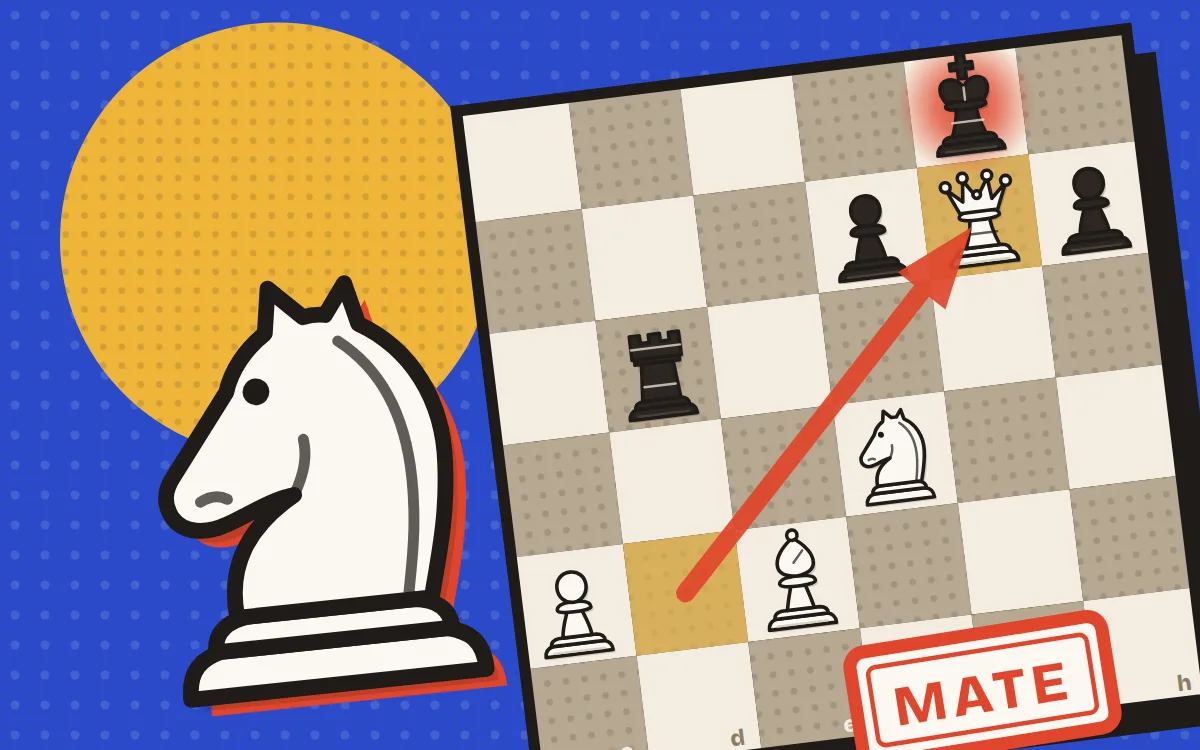
The king in shatranj is the shah. When the king was attacked, players said shah, and when it was trapped, shah mat, usually explained as the king is helpless. Through Arabic and old European languages, shah mat became checkmate in English.
Urdu kept the original words. Check is shah, often said as shah lag gayi, and checkmate is shah mat. Stalemate is often called paat. If you play in Urdu, you are using words much older than the English ones.
How the old pieces moved
Most pieces in shatranj moved like their modern versions, but two were much weaker:
- Shah (king): one square in any direction, as today.
- Firzan or farzin (counsellor): only one square diagonally. This piece later became the modern queen, the strongest on the board.
- Fil or alfil (elephant): jumped exactly two squares diagonally, leaping over anything in between. It became the modern bishop, which slides any distance.
- Faras (horse): the same L-shaped jump as the modern knight.
- Rukh (rook): any distance in a straight line, as today.
- Baidaq (pawn): one square forward, capturing diagonally, with no two-square first move. A pawn reaching the end became a firzan.
Tip
There was no castling and no en passant in shatranj. Both came with the faster modern game.
Winning in shatranj
Because the counsellor and elephant were so weak, shatranj was slower, and many games were decided in long endgames. Checkmate won the game, but so did capturing every enemy piece except the king, called a bare king. In many traditions, stalemating your opponent was also a win, not a draw as it is now.
Modern chess, which appeared in Europe around the end of the fifteenth century, made the queen and bishop long-range pieces. Games became sharper and faster, and the rules set out in chess rules for beginners took shape over the following centuries.
Urdu names of the pieces today
When people in Pakistan play chess today, they mix old and new names:
- Badshah (king).
- Wazir (queen): literally the minister, a descendant of the old counsellor.
- Rukh or hathi (rook): hathi means elephant, a reminder of the old army.
- Fil or oont (bishop): fil also means elephant; many people call it oont, the camel.
- Ghora (knight): the horse, whose move is called dhai ghar, two and a half squares.
- Piyada (pawn): the foot soldier.
Play shatranj today
Our chess game plays modern rules, with Urdu menus on the Urdu site, eight computer opponents, puzzles, and rooms for playing a friend online. If you are learning, start with chess rules for beginners, then practise the classic checkmate patterns.
Questions people ask
- What is shatranj?
- In Urdu and Persian it is the word for chess. Historically it also names the medieval game played in Persia and the Islamic world before modern chess rules appeared in Europe.
- Is shatranj different from chess?
- Today's shatranj in Pakistan is ordinary chess. Old shatranj had a weak queen that moved one square diagonally and an elephant that jumped two squares diagonally, with no castling.
- What does shah mat mean?
- It is the Persian phrase behind checkmate. Shah is the king, and shah mat is usually explained as the king is helpless or defeated.
- What is the bishop called in Urdu?
- Fil, from the old word for elephant, or oont, the camel, which is what many people in Pakistan call it.