ComparisonLudo
Ludo vs Mensch ärgere dich nicht vs Parchís vs Petits chevaux
Ludo, Mensch ärgere dich nicht, Parchís and Petits chevaux look alike, but their boards, dice and rules differ. Here is a side by side comparison and a guide to which one suits your table.
7 min readUpdated By PlayNest team
One family, four games
Ludo, Mensch ärgere dich nicht, Parchís and Petits chevaux are close relatives. All four descend from Pachisi, the Indian race game played on a cross-shaped board, and all four share the same idea: each player has four pieces waiting in a corner, dice decide how far you move, and the first to bring every piece round the board and into the middle wins. If you can play one, you can learn another in five minutes.
The differences are in the details, and families who know one version often insist the others have it wrong. That is why every game here has its own page: Ludo, Mensch ärgere dich nicht, Parchís and Petits chevaux. Below are the differences that change how a game plays.
The quick comparison
The standard rules of each game, as we play them by default, in one list. Every one of them can be changed with house rules.
- Ludo: 52 squares, 1 die (up to 3 here), 4 pieces (1 to 4 here), a 6 to come out, a 6, a capture or reaching home gives another roll, safe star and start squares, optional blockades.
- Mensch ärgere dich nicht: 40 squares, 1 die, a 6 to come out, a 6 gives another roll, three tries when everything is at home, no safe squares, compulsory capture and compulsory clearing of the start square, exact entry into four home squares.
- Parchís: 68 squares, 2 dice used one at a time, a 5 to come out, no extra roll for a 6, doubles roll again and three doubles send the last piece home, twelve seguros, barreras of two pieces, a bonus of 20 for a capture and 10 for reaching the meta.
- Petits chevaux: 56 squares, 1 die, a 6 to come out, a 6 gives another roll, three tries when everything is in the stable, no safe squares or forced captures by default, a six-step escalier and an exact roll to the central square.
Boards and how far you travel
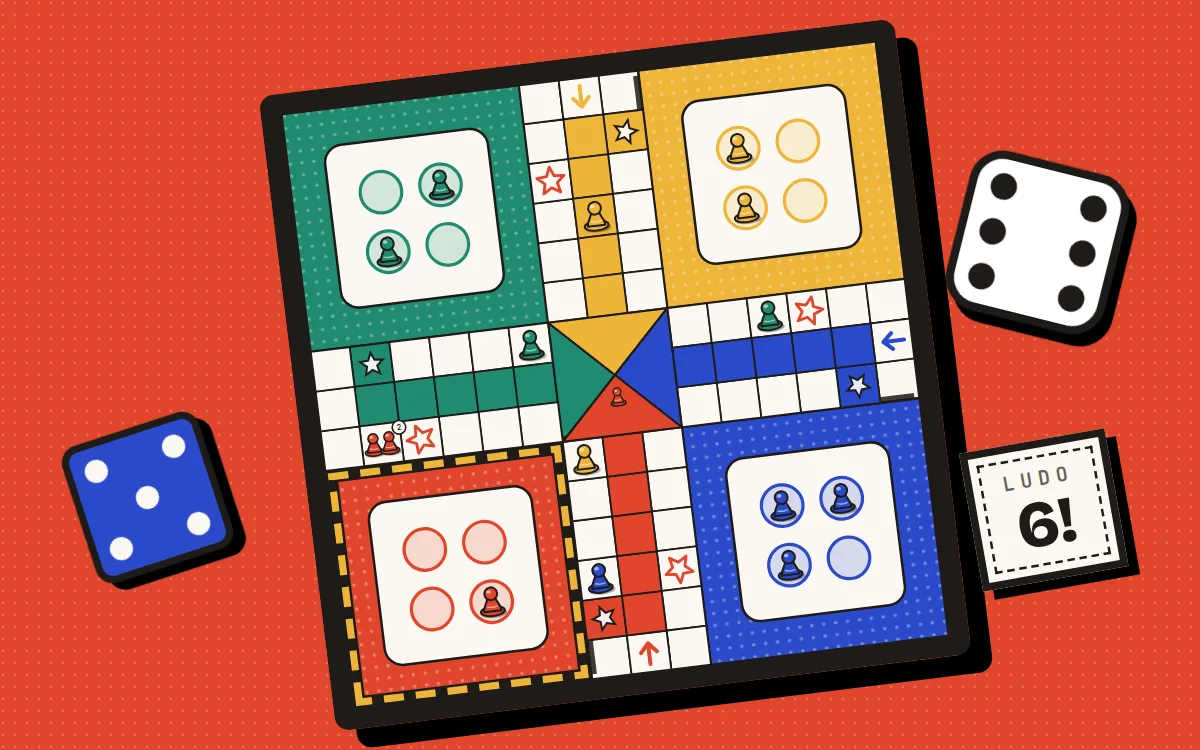
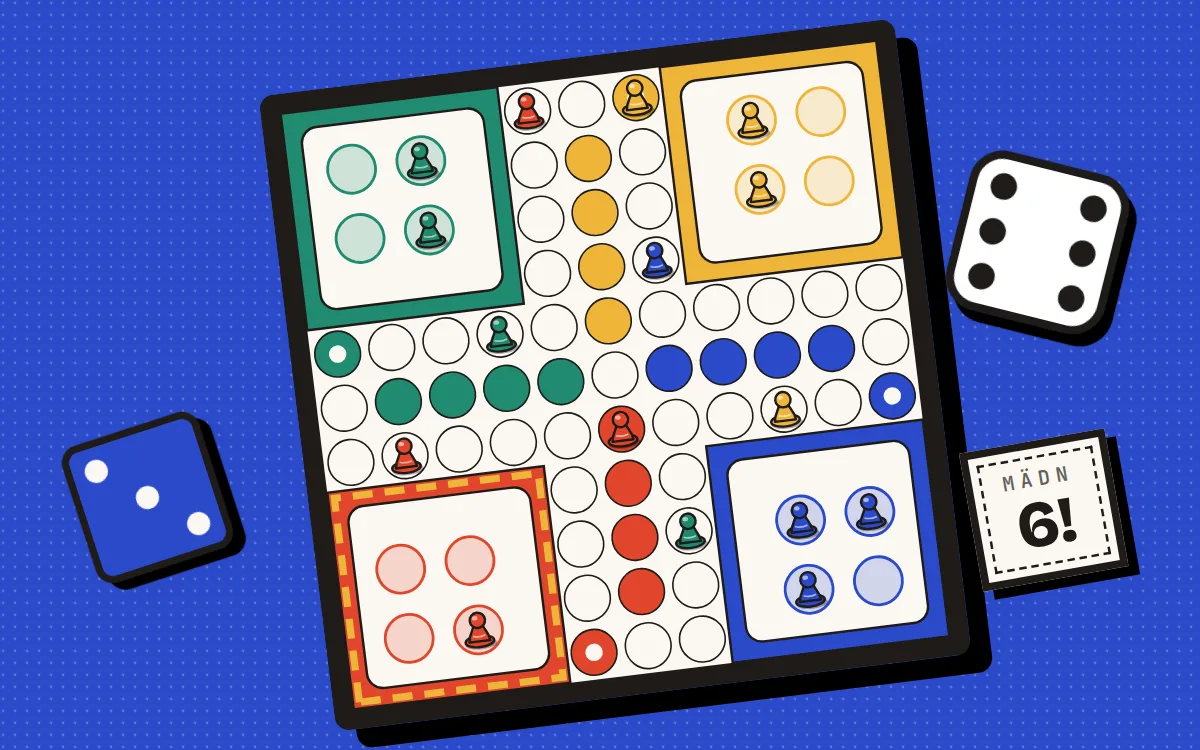
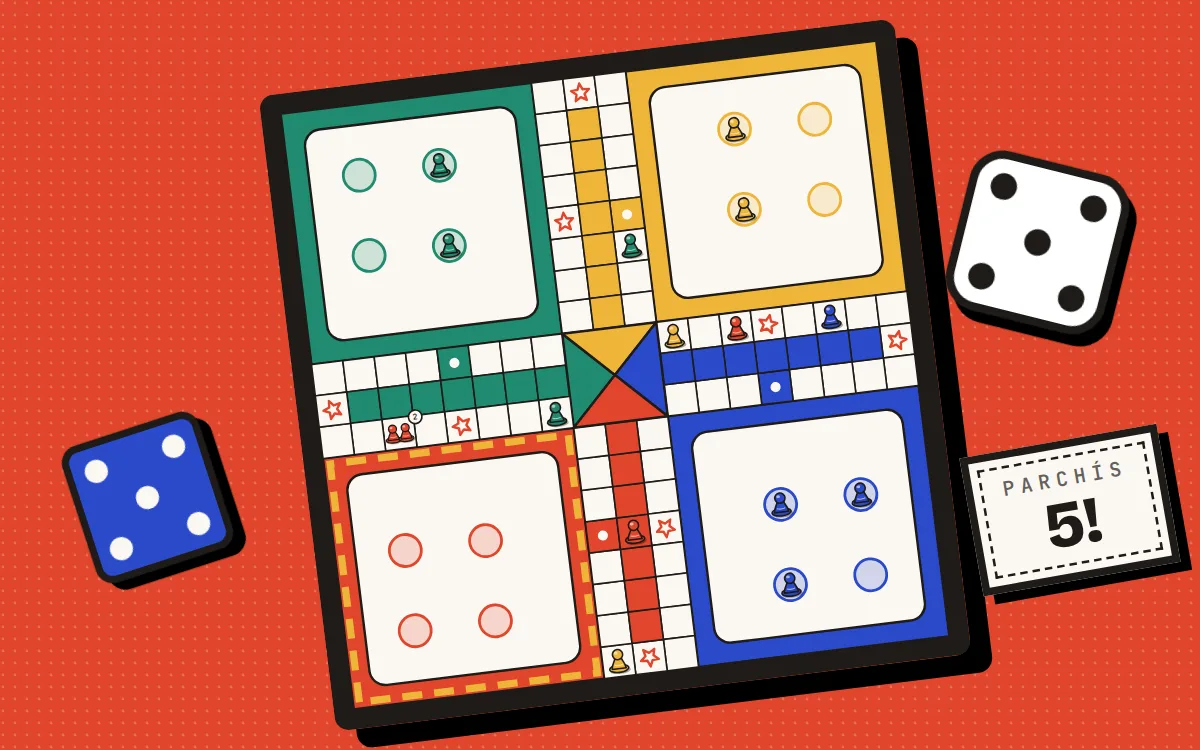
All four boards are crosses, but the track differs. Ludo has 52 squares, with each colour travelling 51 squares and then a five-square home column. Mensch ärgere dich nicht has 40 squares and a lane of four home squares, so it is the shortest trip and has no centre. Petits chevaux has 56 squares, a six-square escalier and a central square. Parchís has the longest circuit at 68 squares, plus a seven-square pasillo and the meta.
The trip length matters for how a game feels. In Mensch ärgere dich nicht, a piece travels 43 steps from start to the last home square, so games are quicker and pieces meet more often. Parchís is long, but two dice and bonus moves cover a lot of ground per turn.
Dice and getting out
Three of the games use one die and a 6 to leave home. Parchís uses two dice and a 5, and each die is its own move, which is the biggest difference in feel: you choose how to split your move. Ludo can also be played with two or three dice and various entry rolls using house rules, and in that mode it begins to feel like a bridge to Parchís.
Mensch ärgere dich nicht and Petits chevaux give you three throws to find a 6 when every piece is at home. That is a strong rule because it keeps the game moving. In Ludo the first player to find a 6 usually has a head start, which makes the opening more of a lottery. Parchís forces you to bring a piece out when you throw a 5.
Safe squares, blockades and captures
Ludo has safe squares (the star squares and the start squares), and Parchís has twelve seguros. Mensch ärgere dich nicht and Petits chevaux have none by default. The safe squares make the game gentler: a piece you can park on a safe square survives. Without them, as in Mensch ärgere dich nicht, you rely on distance.
Blockades are standard in Parchís, where two pieces of one colour form a barrera that blocks everybody, and optional in Ludo and Petits chevaux. In Mensch ärgere dich nicht you can jump over anything, so there are none. Captures send the piece back to the start in all four, but they also have different prizes: another roll in Ludo, a bonus of 20 in Parchís, and nothing in the others, where the prize is the setback you cause.
Compulsory moves
Mensch ärgere dich nicht is famous for compulsory moves: you must clear your start square, bring a piece out on a 6 and capture whenever you can, in that order of priority. That is what makes it annoying and tactical in a very particular way, because you can use an opponent's compulsory capture as a trap. Parchís forces you to use a 5 to leave the nest and to open a barrera when you throw doubles. Ludo and Petits chevaux have no compulsory moves by default, though both let you switch some on.
The finish
All four use an exact roll to finish, but in different ways. In Ludo you need the exact number to land in the centre. In Mensch ärgere dich nicht you fill four home squares, and you cannot jump over your own pieces there, so the order matters. In Petits chevaux you climb an escalier and need the exact number to reach the central square. In Parchís you need exactly 8 from the last circuit square to the meta, and reaching it earns a bonus of 10.
Players, seating and online play
All four games are made for four players, and all four work with two or three if the computer or empty corners fill the gaps. With two players it is traditional to sit in opposite corners, and in our versions you can also choose side by side. In every game on PlayNest you can play against Easy, Smart or Hard computers, on one screen with friends, or online: press Invite friends, send the link on WhatsApp, and up to three friends join without installing anything. Chat and voice chat are there for the arguments, and quick match finds a table when nobody is around.
The computer opponents use the same rules as you. Easy plays mostly at random, Smart scores every move for captures, danger and progress, and Hard also looks one move ahead at what the next player could roll. That makes the Hard computer a good way to learn the tactics of each game before you play at the family table.
Which game should you play?
Play Ludo if you want the version with the most options: one to three dice, one to four pieces, team play and every house rule as a checkbox. It is also the one most people in South Asia grew up with. Read the Ludo rules for the details.
Play Mensch ärgere dich nicht if you like quick, sharp games with forced moves and no mercy, and you enjoy setting traps. Play Parchís if you like choices, with two dice, barreras and big bonus moves, and do not mind a longer game. Play Petits chevaux if you want a gentle family game with the exact-roll drama at the end and few rules to explain. You can start with the Mensch ärgere dich nicht guide, the Parchís guide or the Petits chevaux guide.
Tip
Mixed group? Choose the game that the oldest or newest player already knows. The 6 to come out is the same in three of the four, so a quick explanation of the differences is usually enough.
Questions people ask
- Is Mensch ärgere dich nicht the same as Ludo?
- No, but they are close. Both are race games with a 6 to come out. Mensch ärgere dich nicht has 40 squares, compulsory captures, no safe squares and no bonus roll for capturing. Ludo has 52 squares, safe star squares and usually gives another roll for a 6, a capture or reaching home. Both are played with four pieces each.
- What is the difference between Parchís and Ludo?
- Parchís uses two dice, each as its own move, a 5 to leave the nest, 68 squares, twelve seguros and barreras of two pieces, with bonus moves of 20 for a capture and 10 for the meta. Ludo normally uses one die and a 6, has 52 squares and gives another roll for a 6, a capture or arriving home.
- Are Petits chevaux and Ludo the same game?
- They are cousins. Petits chevaux has a 56-square ring, an escalier of six steps and a central square that needs an exact roll, no safe squares by default and one die. Ludo has 52 squares and a five-square home column with safe squares. In both you need a 6 to leave home.
- Which of the four is best for beginners?
- Ludo and Petits chevaux are the gentlest, because there is little to remember. Mensch ärgere dich nicht adds compulsory moves, which are easy to learn but can be punishing, and Parchís has the most rules. All four are simple enough to learn from a game or two against the computer.